Hamburg's Stadtpark: A Park Built to Be Used
In 1914 Hamburg built a park for people to use rather than admire, and more than a century later that is still what it is.
When I moved to Hamburg in 2018, I bought a bike in my first week. After that, almost every day after work, I was just jumping on it and cycling around the city without any direction. That is how I discovered places like Niendorfer Gehege, Haynspark and the Stadtpark.
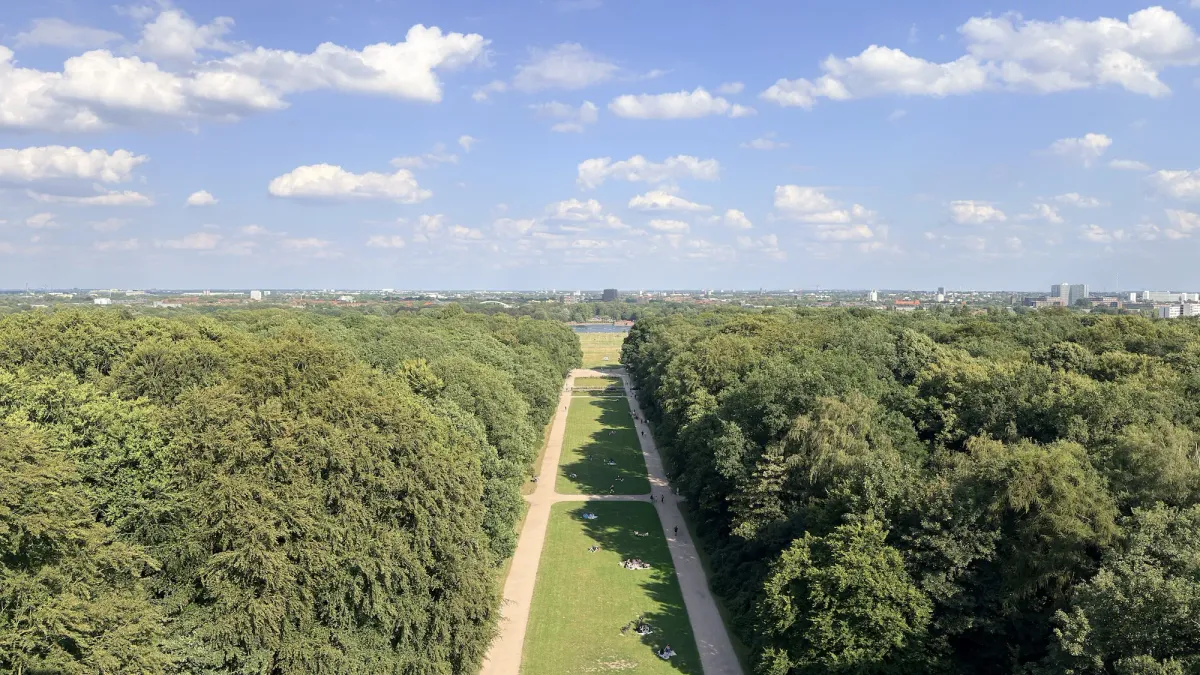
The first time I ended up in the Stadtpark, the thing that struck me was the amount of trees. I was cycling through the city and suddenly I found myself in a wood. Then came the Planetarium with its red bricks, and the huge lawn in front of it, and I was amazed by the size of the whole park.
Every big city has its own city park. Central Park in New York, Hyde Park in London, the Englischer Garten in Munich, the Tiergarten in Berlin. Those are the ones that come to mind. The Stadtpark is smaller than all of them and almost nobody outside Hamburg knows about it. But it was planned from the start around what people would do in it, rather than only around how it would look, and more than a hundred years later it still works that way. After living next to it for years, I think that matters more than any ranking by hectares.
The park is not really that far from the city centre. So a lot of people live close enough to just walk in. A year later, when I needed to move out of my loud neighbourhood, the park had a big impact on my decision about where to go. And living there also showed me that the park was not just a huge lawn and a Planetarium. It is a giant complex for recreational activities.
The lawn
The Stadtpark opened in 1914 and was designed by Fritz Schumacher, with the main purpose of active use instead of quiet strolling. It was built on 149 hectares, close to the districts where the working class was crowded in. Small flats, not much free time. The park was supposed to be the place they actually did things.
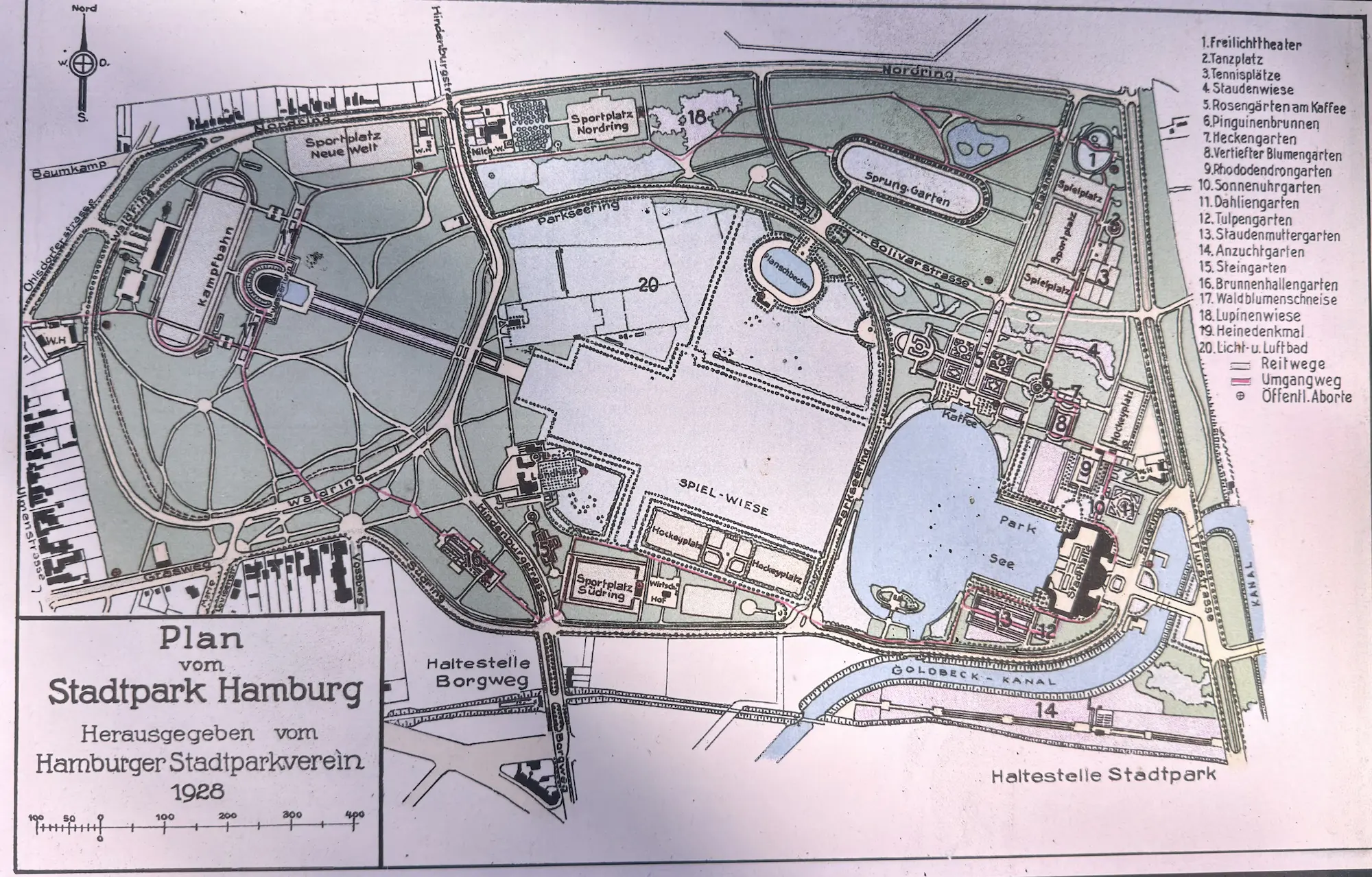
The numbers also show it worked. On a sunny weekend more than 200.000 people come to the park, which is around 10 percent of the whole city.
That intention is still there when you look at the lawn. It is a huge open space that gives people room to do whatever they want. A couple of sections of it are marked as grill areas, with special bins for the used coals.
If you visit this area on a sunny weekend, you see how diverse this space is. And when I say diverse, I do not only mean the activities. It is also the people. Sometimes I joke with my friends that there are so many nationalities on this lawn that it looks like the United Nations assembly. In most cases a group takes some space on the lawn, bringing their own mat and their own food. Some have already started grilling while the others are playing games. There were games I saw for the first time in this park, like Spikeball, Flunkyball, Boule and Kubb.
On the parts of the lawn where grilling is not allowed, I also see people playing cricket sometimes, or a group doing fitness or yoga together. Sometimes I see people practising music, playing their guitar or saxophone.
The lake
The lawn ends at the artificial lake, the Stadtparksee. Many people swim there, or go canoeing or stand up paddling. Others just sunbathe next to it.
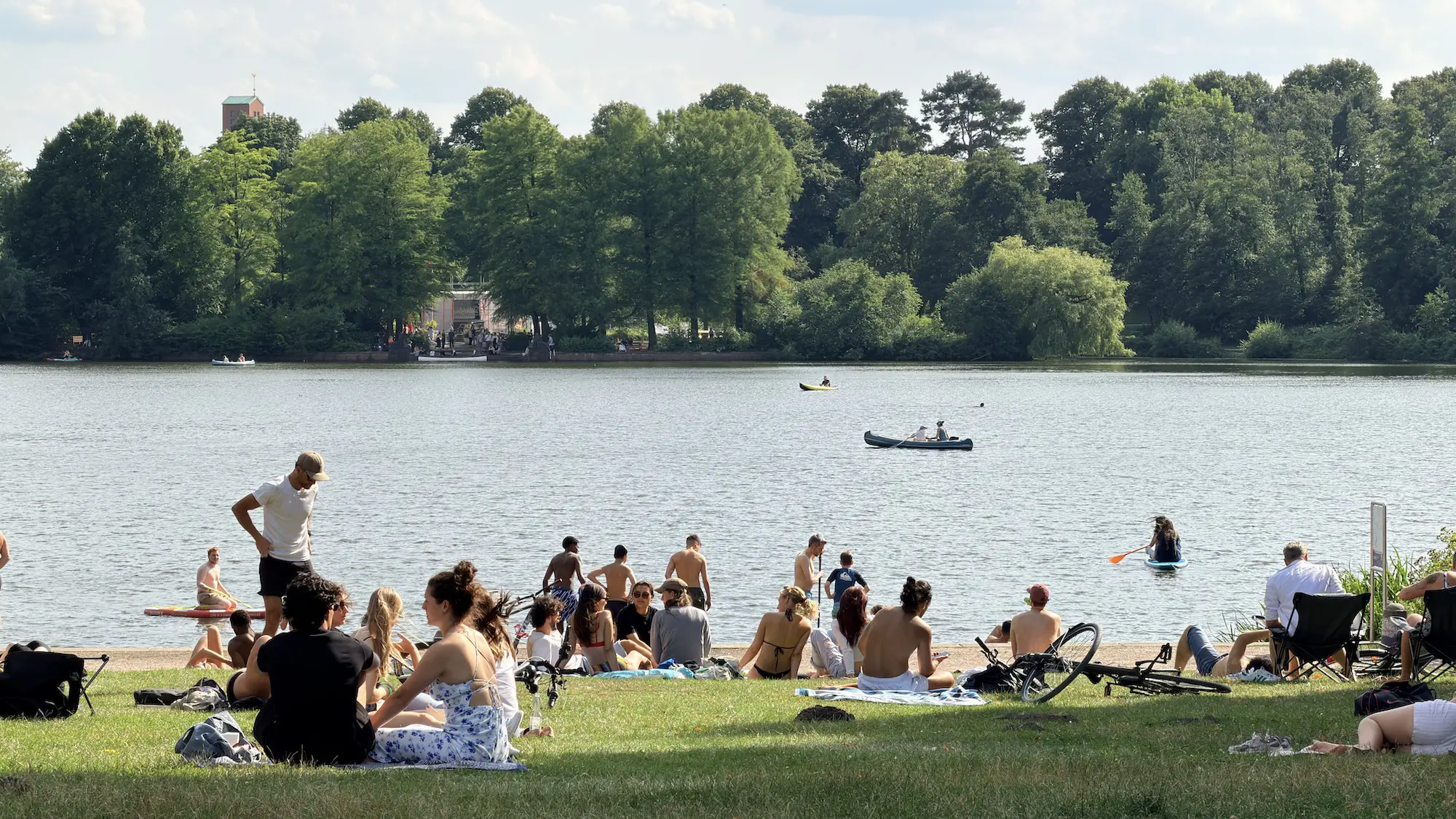
One afternoon I was sitting there with some friends and I watched a woman cycle up to the water. She changed into her swimming things right where she stood, quickly and without any fuss, left her clothes and her bike on the grass, and swam for about half an hour. Then she came out, dried herself, put her clothes back on and cycled off.
What stayed with me was not the swimming. It was that none of it looked planned. She was not spending her afternoon at the lake, she was just going through her day, and the lake happened to be part of it.
At least two places rent out canoes and paddle boards, but I also see many people bringing their own inflatable board, pumping the air on the side, and starting their journey from there and going through the Goldbekkanal.
This is the part that surprised me most when I started reading about other city parks. A lake in the middle of a big city that you can simply get into is not a normal thing.
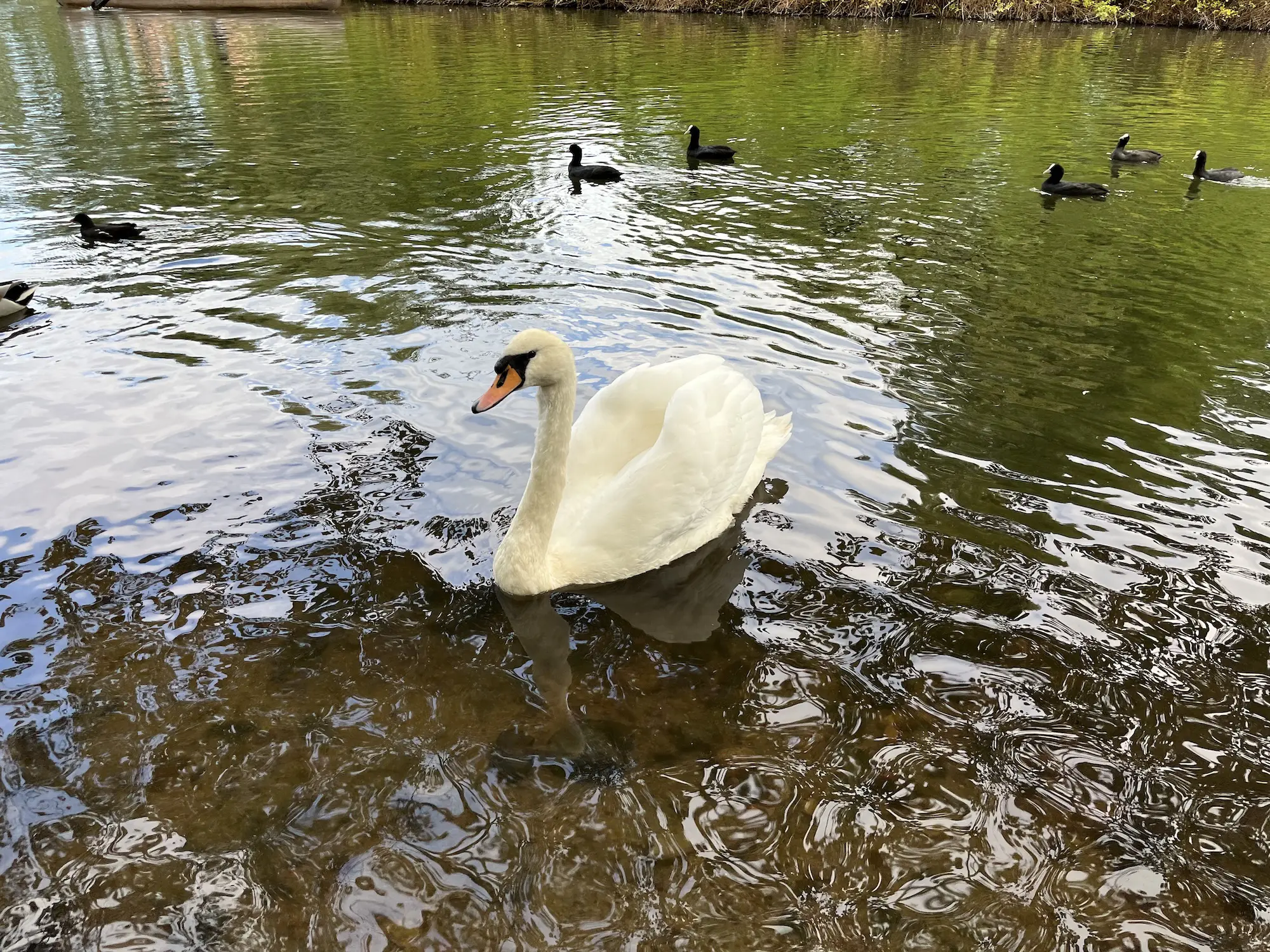
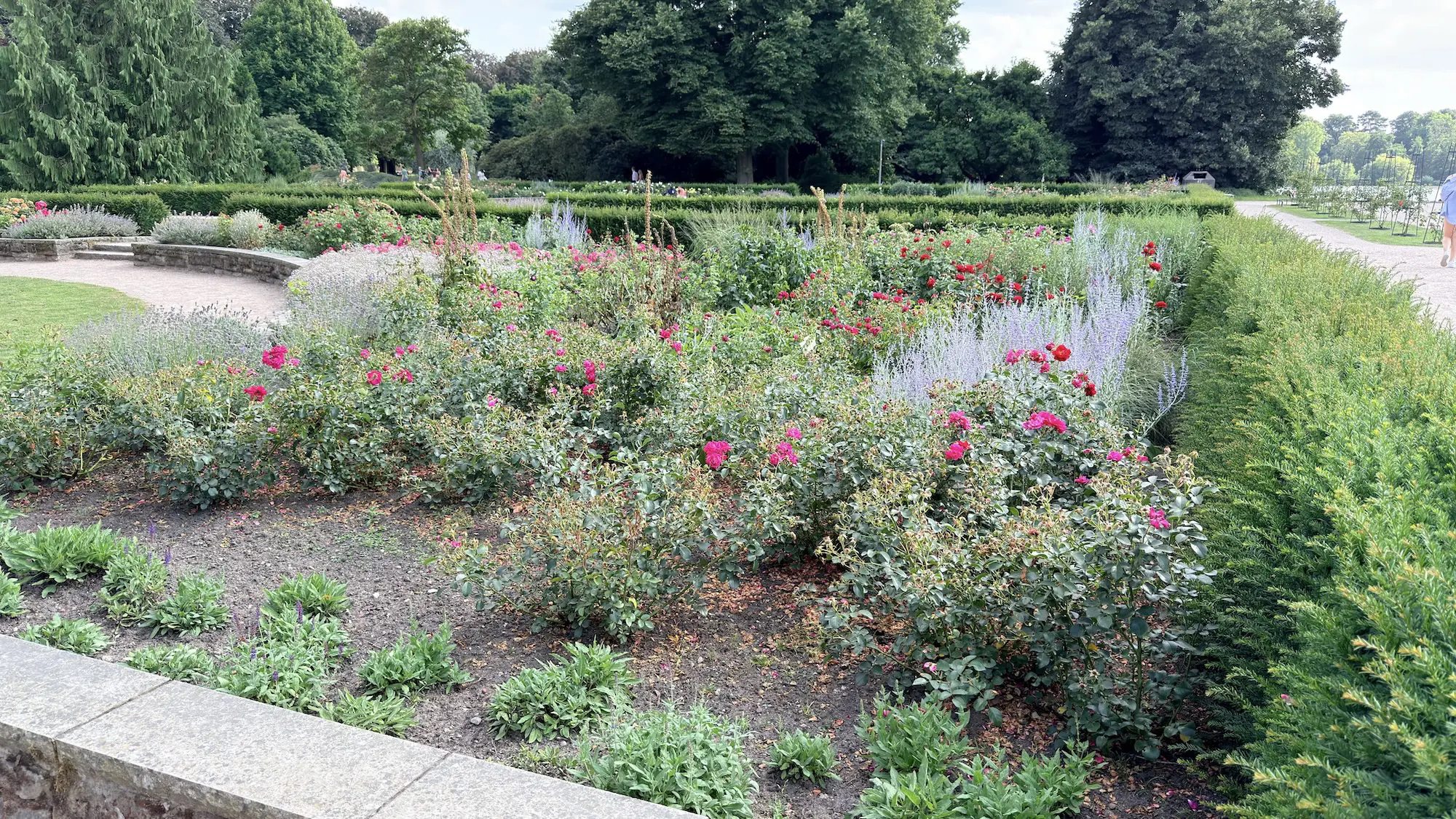
The lake also hosts many animals like ducks and swans. Close to it you find the Rosengarten, with different kinds of flowers in different colours. Around this area people dance salsa from time to time, and other dances that I have never managed to identify.
The sports facilities
When you look at the park, it is so easy to miss the rest of it. The lawn, the lake and the woods around them take all your attention, and you might think that is what the park offers. But if you walk out to the sides, you find many sports facilities.
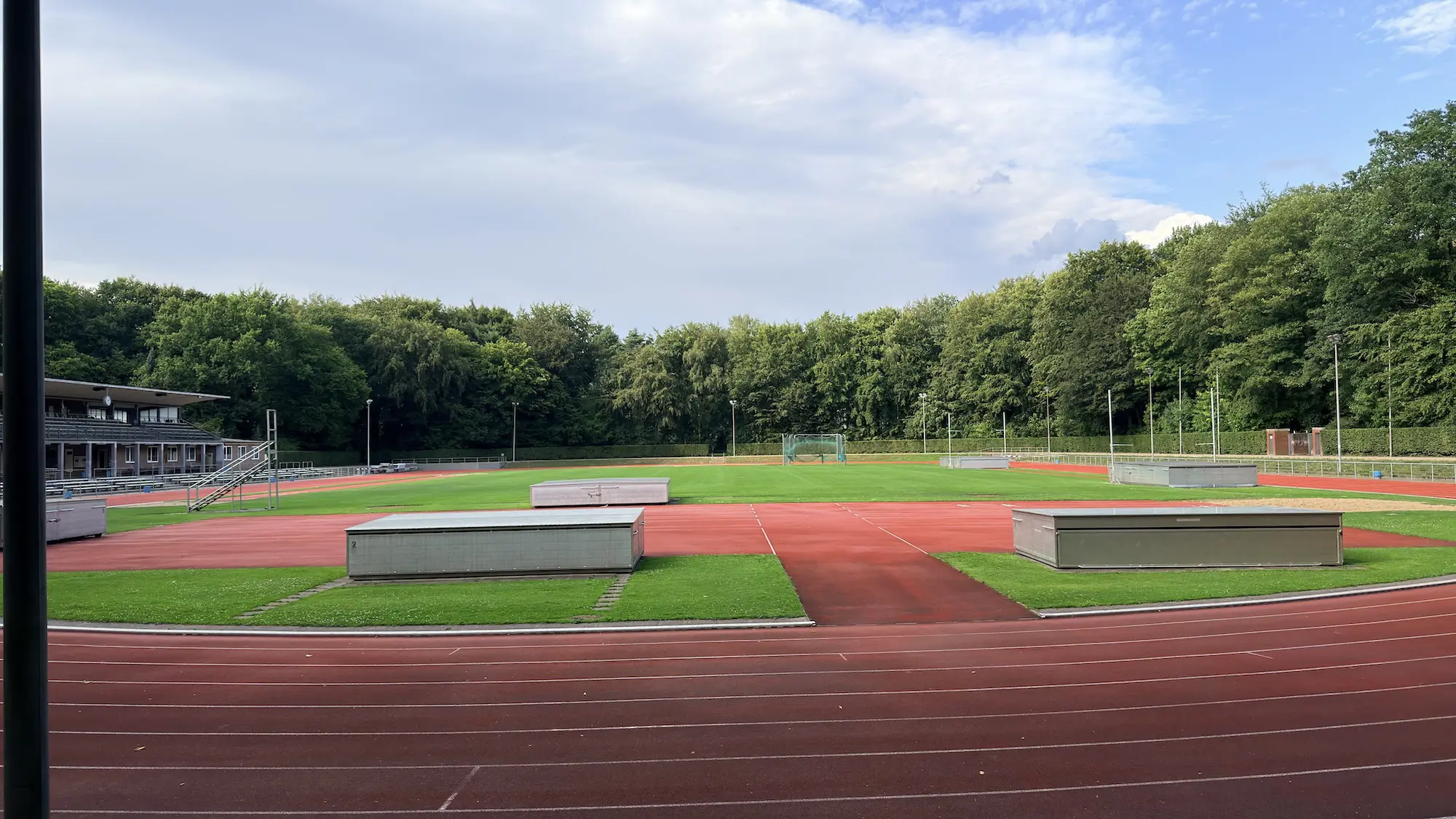
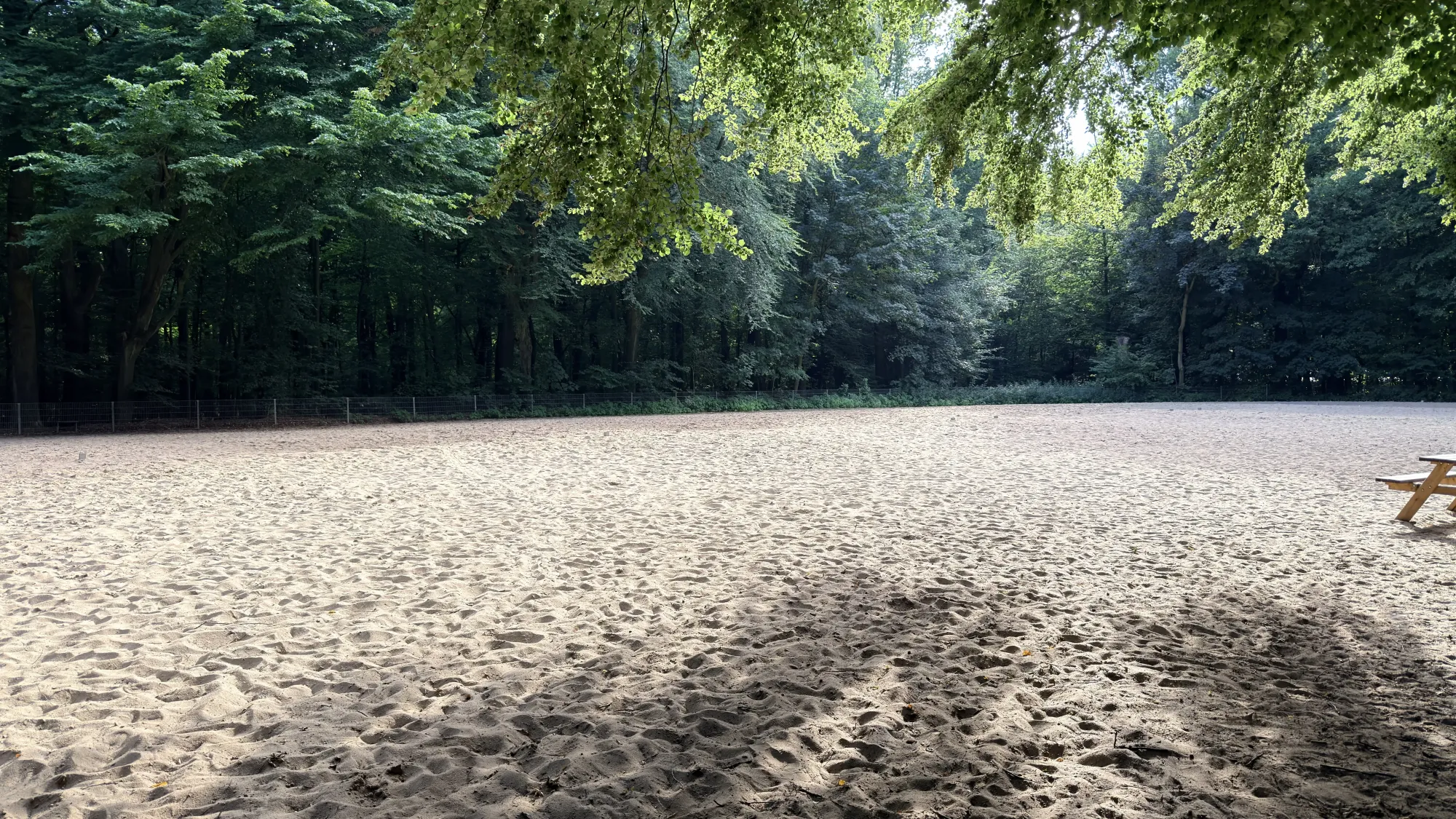
The west side, close to the Planetarium, has an athletics facility with a running track. Right next to it comes an area for beach volleyball and a place to train calisthenics, which I use myself from time to time with a friend. North of this the Hamburg Hurricanes train on two football fields.
I had never heard of the Hurricanes until I saw them in the park. It is a club that was started by expats, with players from dozens of nationalities, and the training happens in English. It is the same mix I joke about on the lawn, just with a schedule and a coach.
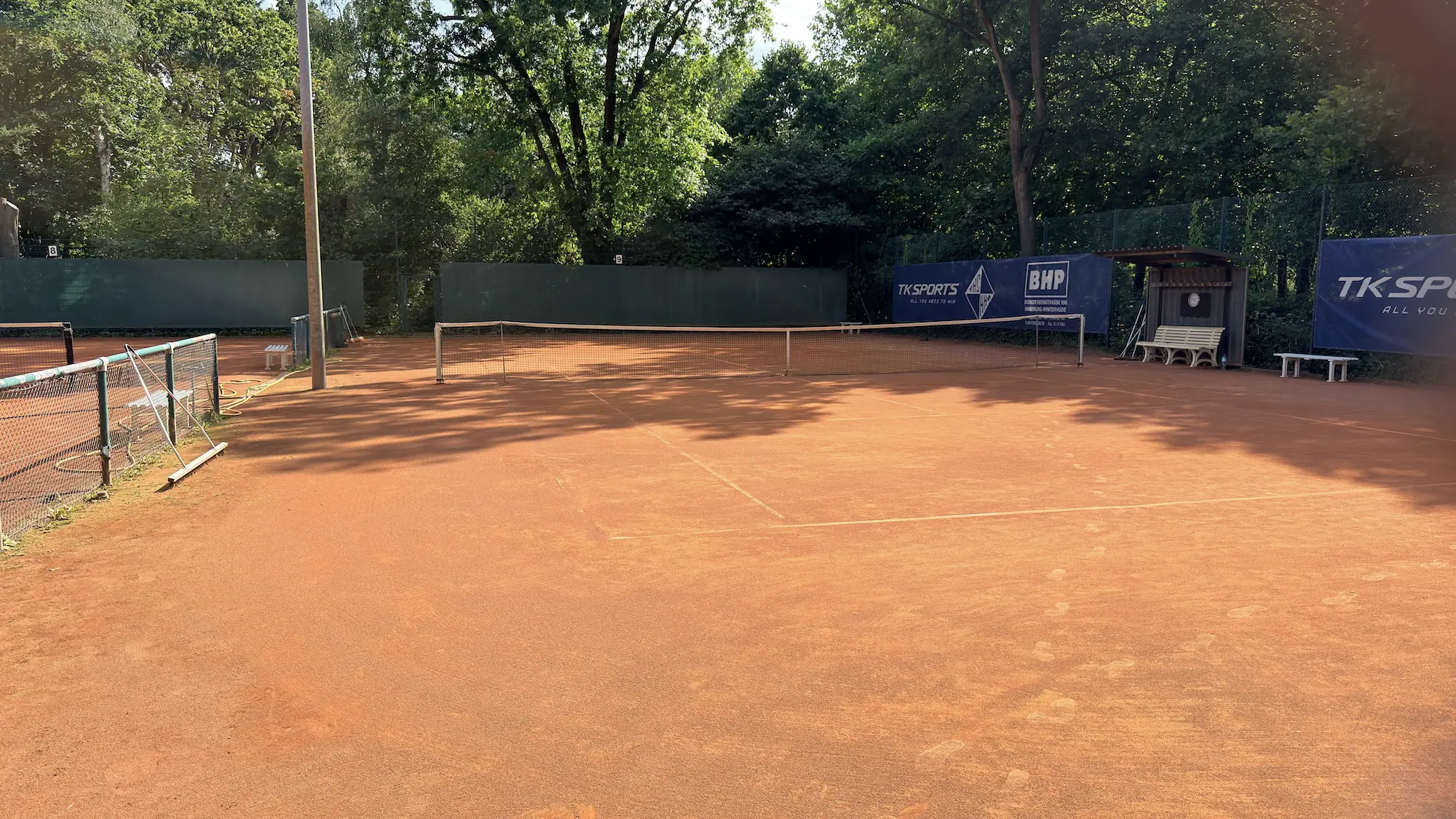
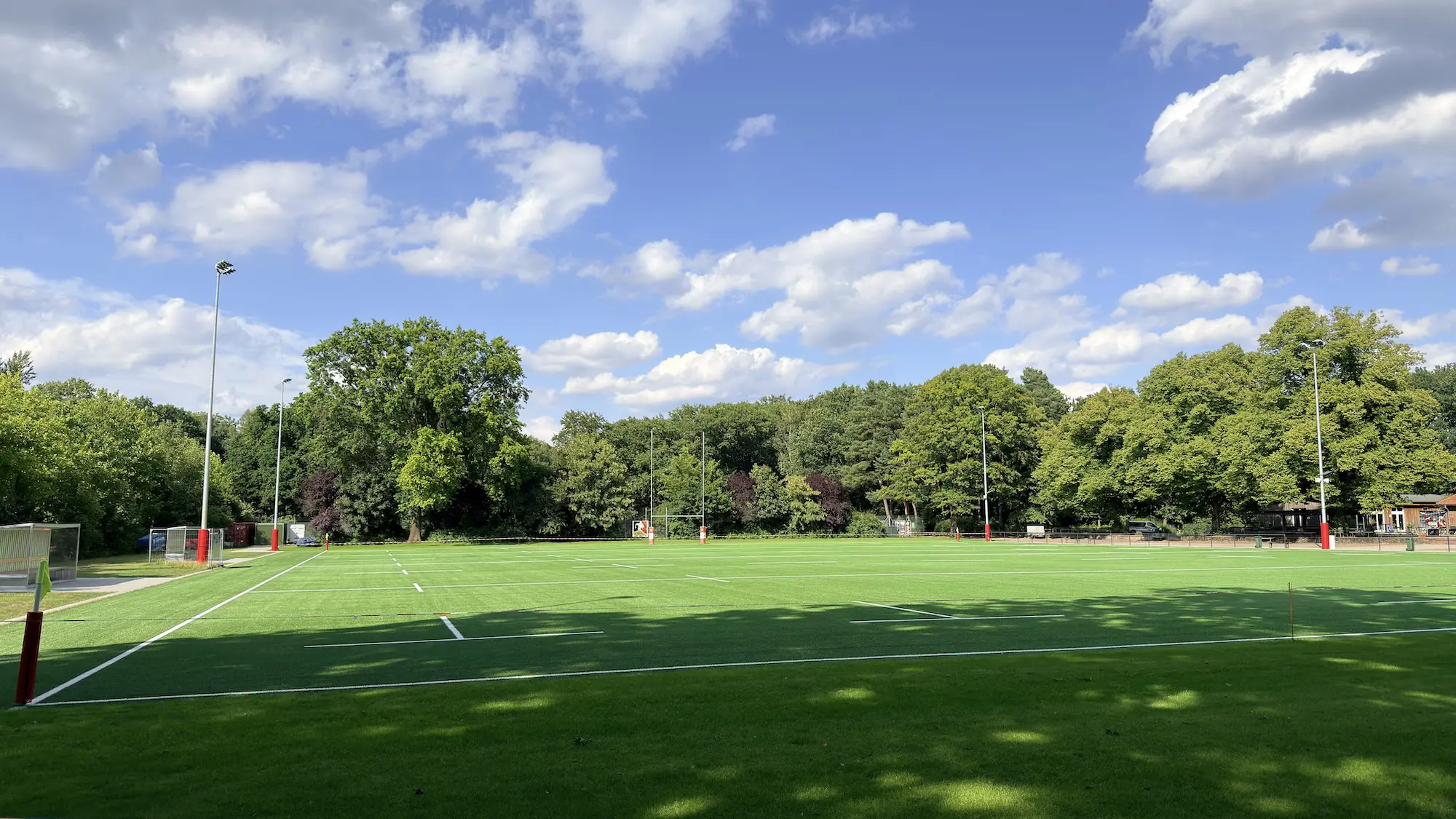
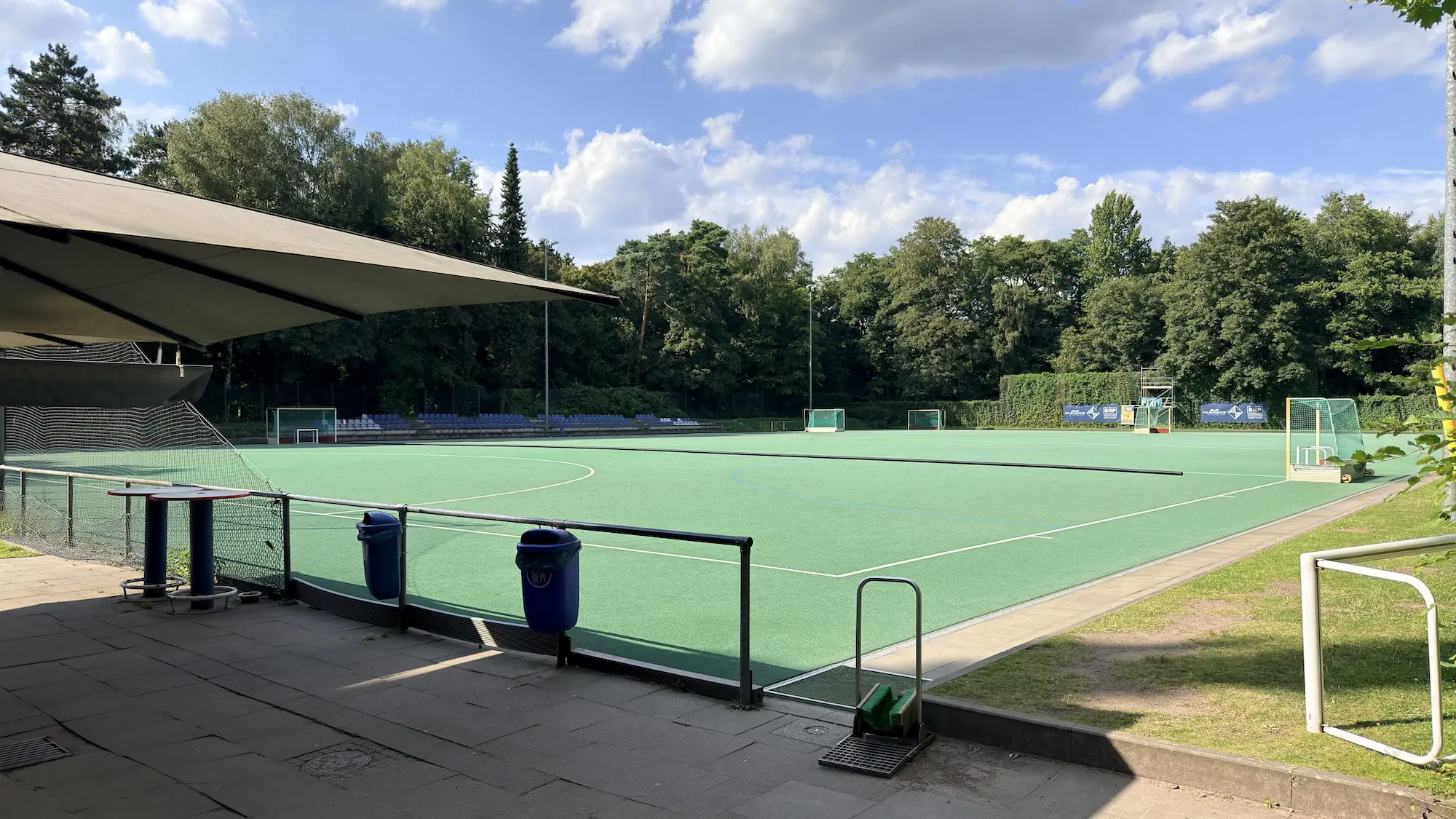
On the eastern side of the park, things get a bit more interesting. Along with many football and beach volleyball fields, you find around 14 tennis courts, a facility for field hockey, another one for rugby, and a bit north of these a place for American football. To be honest, I would not have guessed that some of these sports had enough players in Hamburg to get their own facilities.
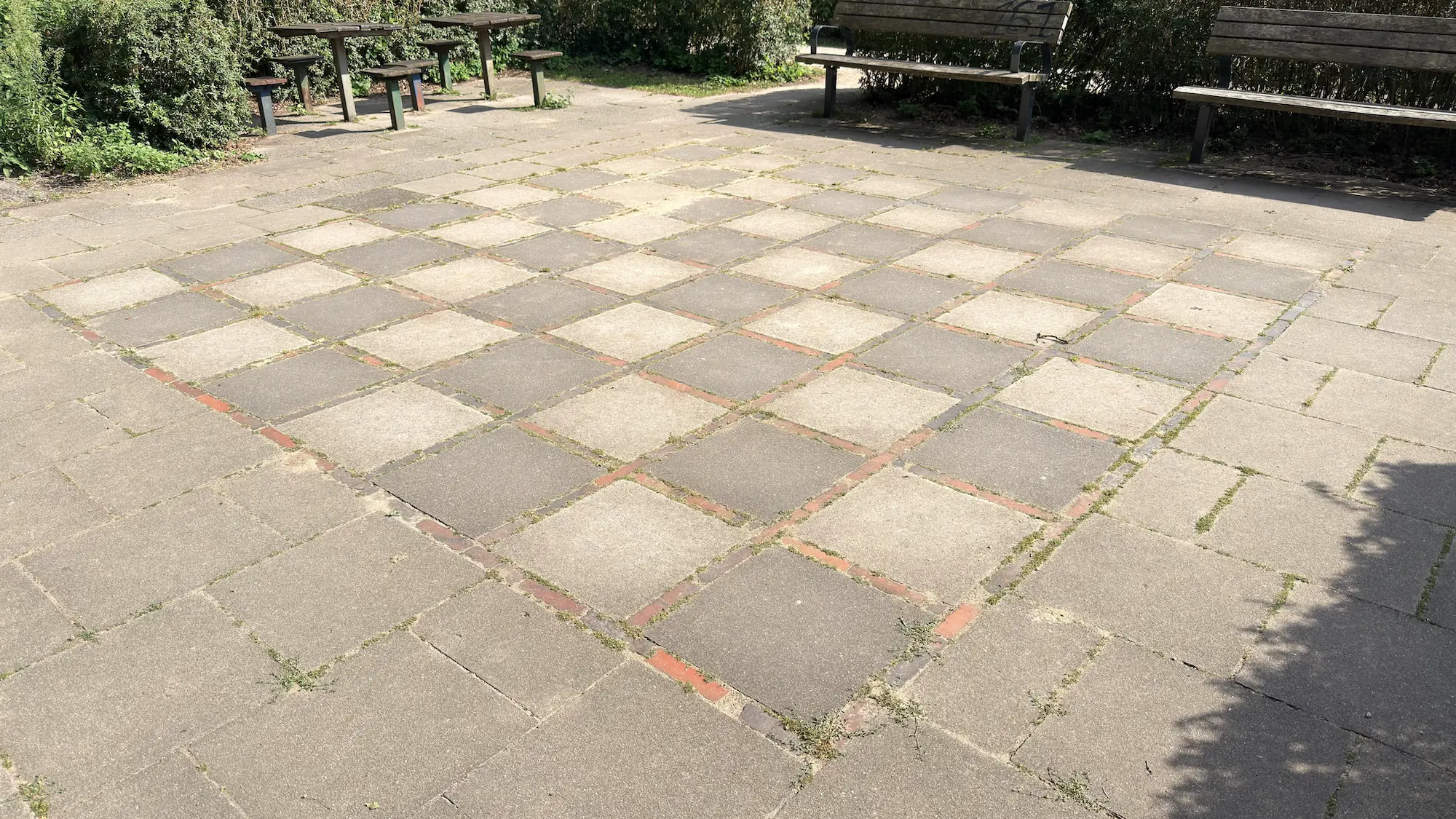
Three dedicated places let you play chess on the ground, not as big as the one you have seen in Harry Potter though. For anyone who wants to play in the normal way, there are also proper tables and chairs. The park has a mini golf course as well, on the southern side.
And of course, the park is a good choice for the many people who are running, walking, or taking their dogs out. Some prefer to run around the whole park, others just circle the lawn.
The playgrounds
North of the lawn a big playground area for kids has its own grill zone, so while the kids are playing the parents can prepare food. If they do not want that, a kiosk sells currywurst and pommes, and that is also where they can go to the toilet.
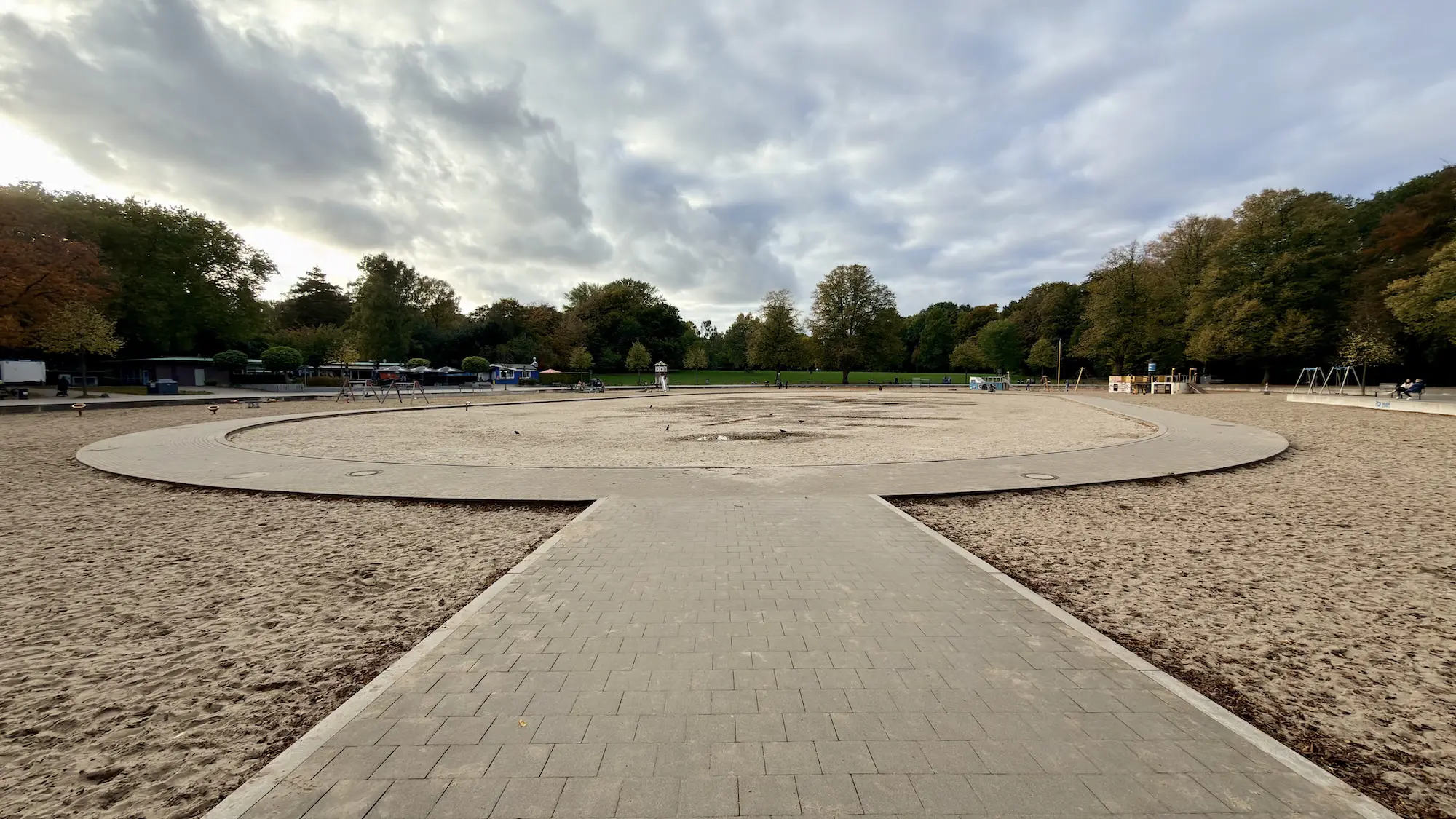
This is also the place that has the biggest paddling pool in the city. When the sun is shining and the temperature goes above 23 degrees, the water is turned on and the pool fills up with kids. It is a very simple thing, but seeing the kids in the water and the parents relaxed around them is one of the nicer things in the park, and it costs nothing.
The playground also has many other things, like a giant swing and a zipline. Close to it, a dedicated area lets people bring their own slackline and practise their balance.
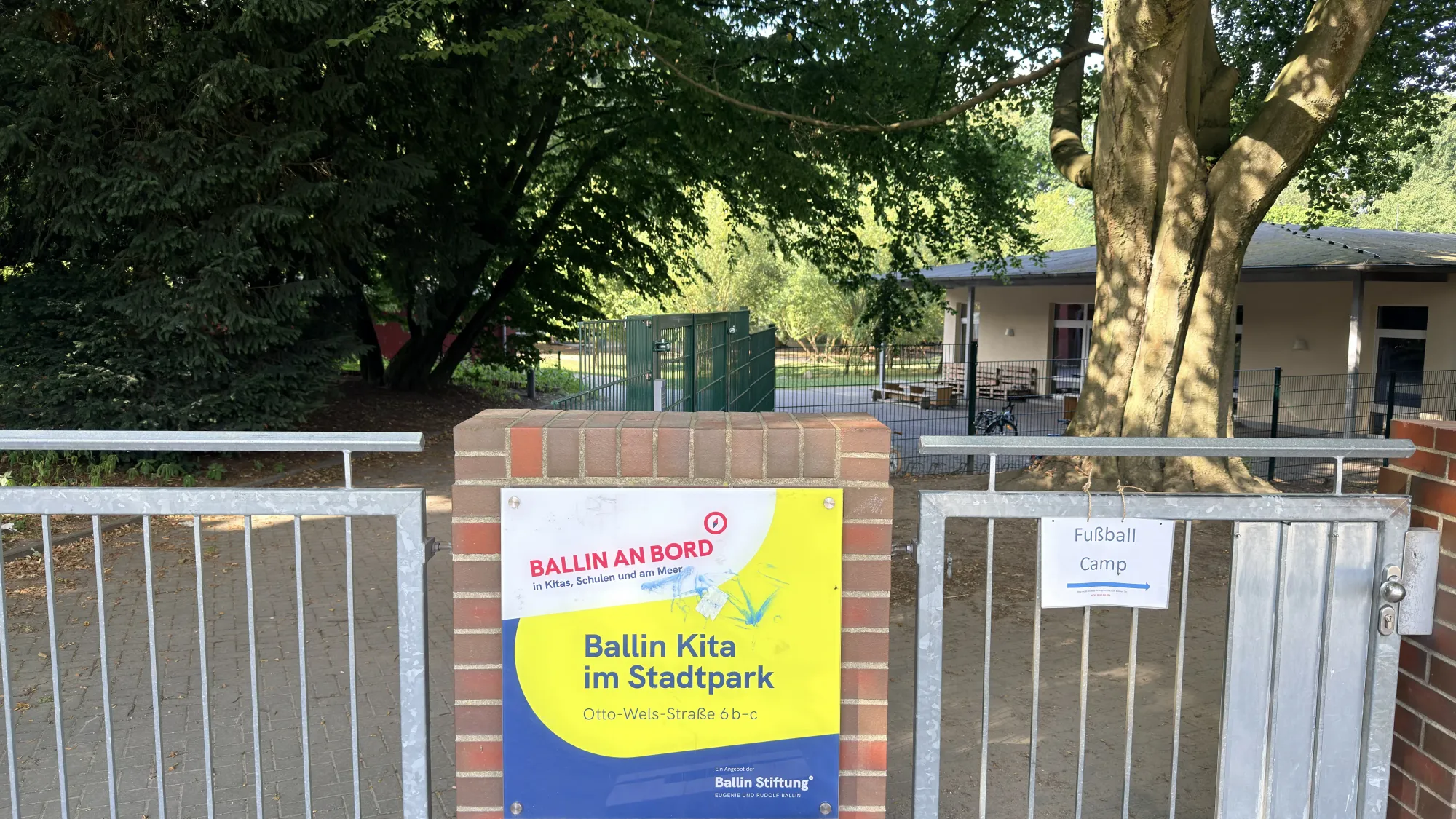
This is not the only playground area, just the biggest one. Multiple playgrounds are scattered along the park, but that is not it. Close to this biggest playground you also find a daycare centre. When I first discovered this place I was surprised, and then I also felt jealous, because going to a city park as a kid every day must be an amazing experience.
Culture
From the cultural perspective, the Planetarium stands as the symbol of the park. There you can book a ticket for different kinds of events, not only in German but also in English. A cafe under the Planetarium serves food and drinks, or an ice cream if that is all you want.
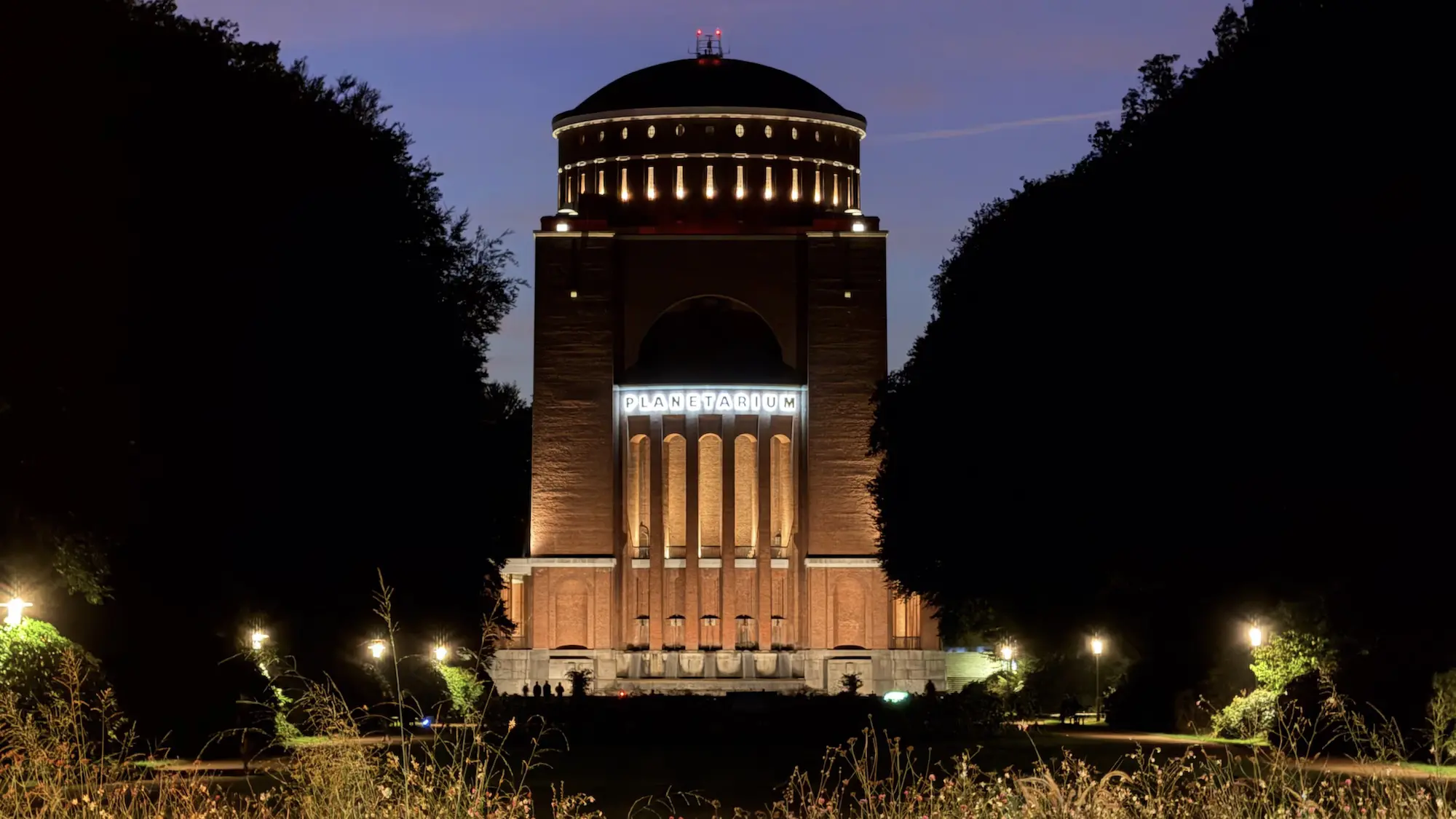
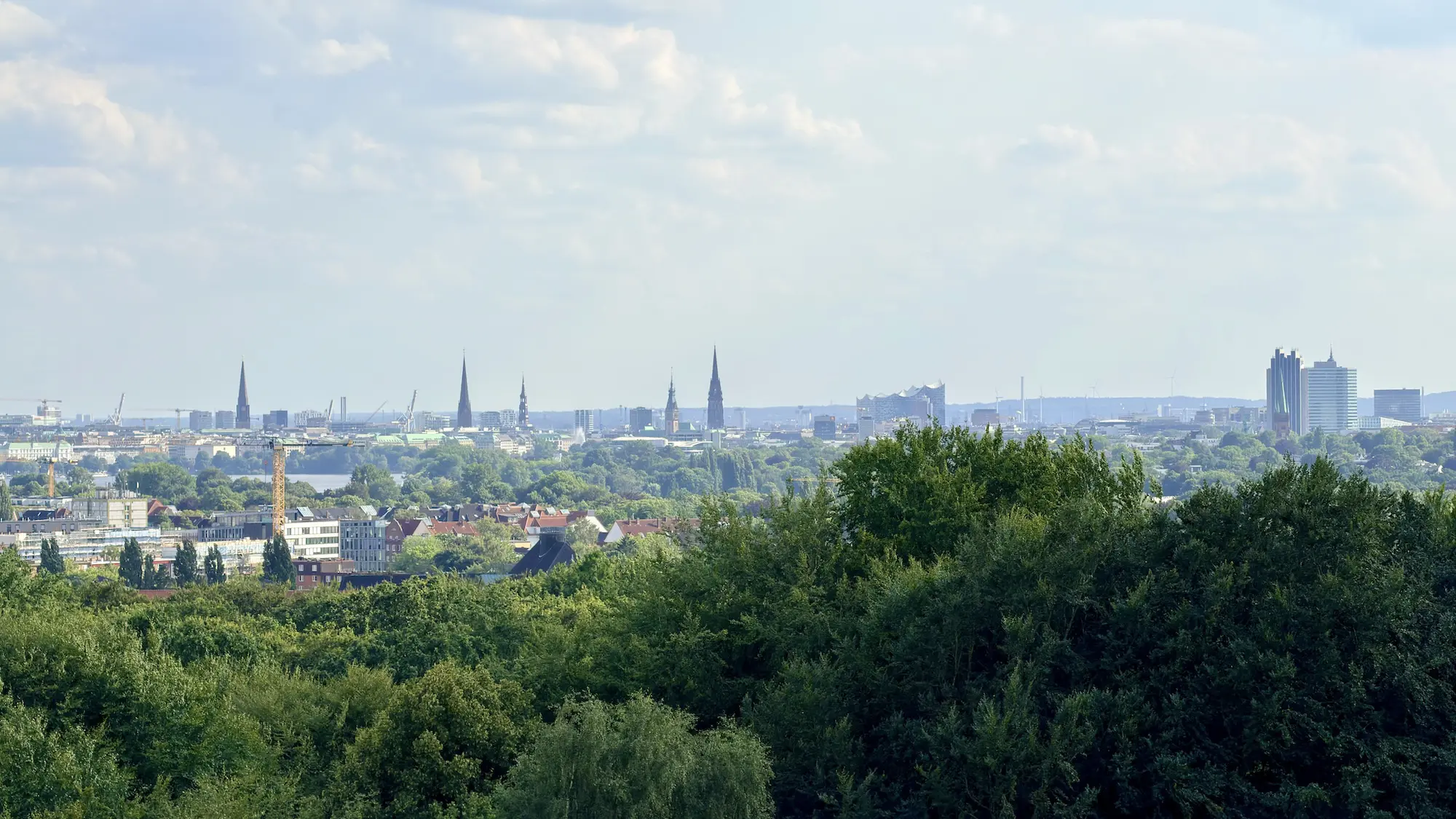
The Planetarium is also a great place to see the whole of Hamburg, since there is almost nothing blocking the view. You can simply buy a ticket for the viewing platform, which only costs 2 euros. From there you can see all the landmarks of Hamburg easily, like the port, the Elbphilharmonie, St. Nikolai, the Rathaus, the bunker and so on.
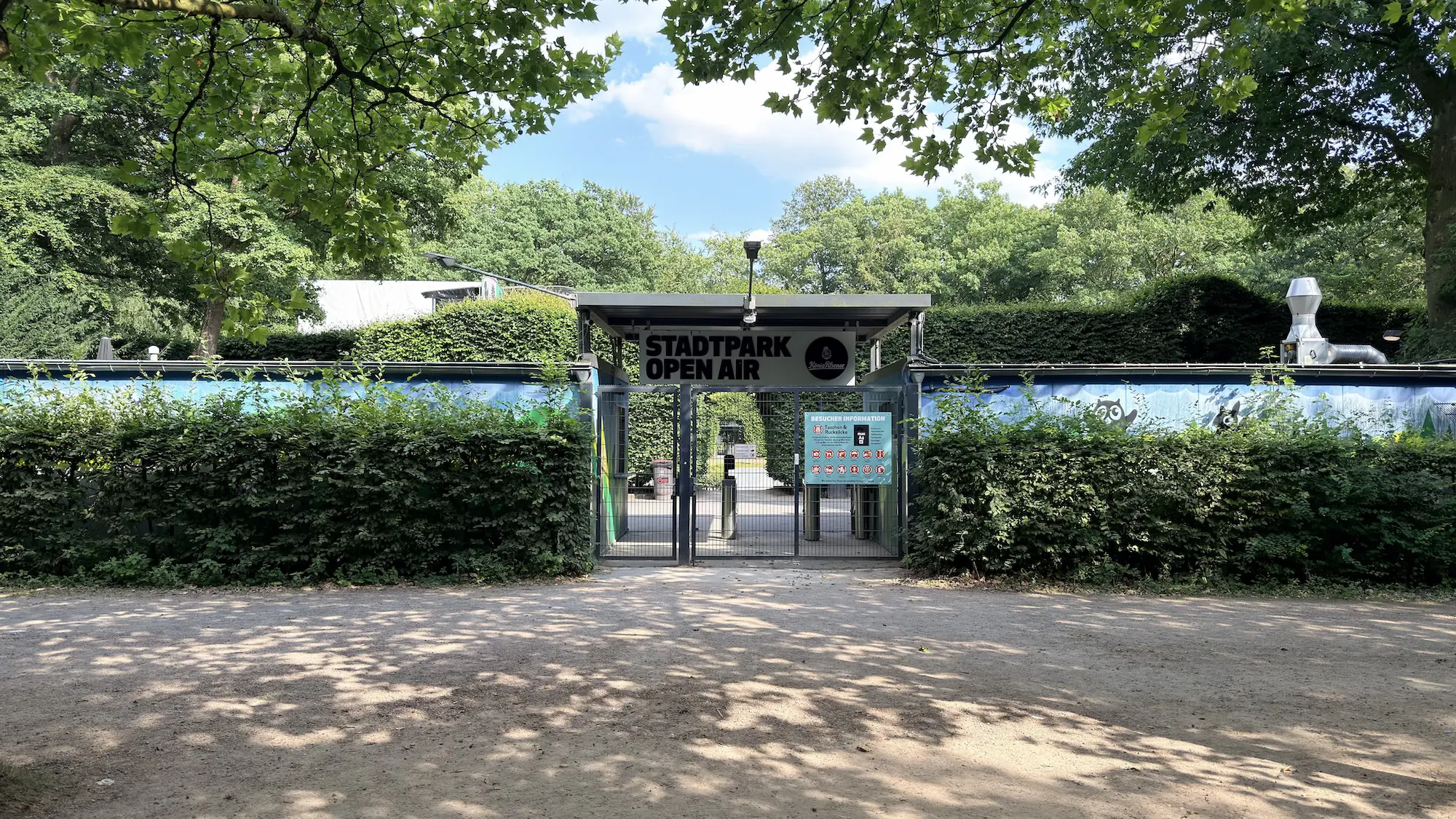
On the east side of the Stadtpark, an open air concert area hosts up to 4.000 visitors, and many artists play there, including international ones. But the part I like most happens outside the fence. During a concert people sit on the grass with their own food and listen from there, without a ticket, and nobody seems to mind.
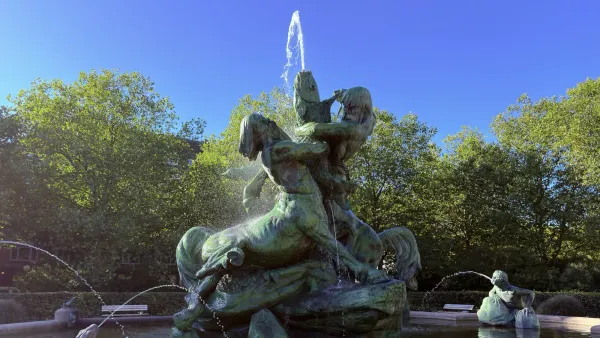
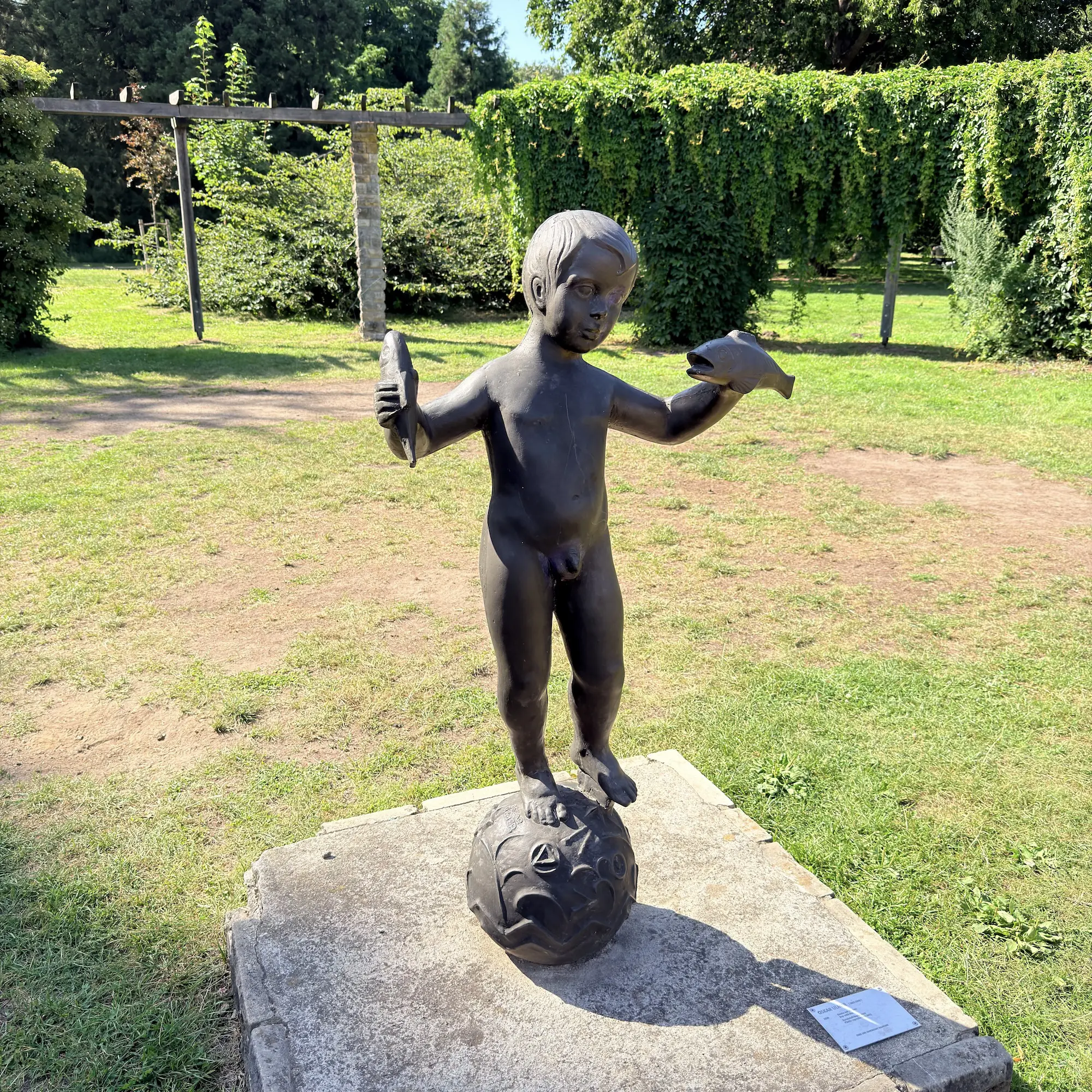
More than 20 artworks are also scattered around the park. Most of them are from the beginning of the 20th century, and some are rebuilt versions of the originals after those were destroyed during the bombing in the Second World War.
Food and drinks
In most cases people bring their own food. Whether I was grilling with friends or celebrating a friend's birthday there, we always carried everything ourselves. But for anyone who does not want to do that, around six cafes are spread through the park, offering different kinds of things, including one with cheesecake. The park also has two beer gardens, one on the east side looking at the lake and the lawn, and the other one, Landhaus Walter, somewhere in the middle, where you can also watch football games like the recent World Cup. This place also hosts a Christmas market in winter. On top of those, it has two restaurants.
The whole park has two water taps, one on the east side and one at the Borgweg entrance. Both of them feel placed for people running around the park rather than for the ones sitting on the lawn.
Accessibility
In the beginning I said that the park is quite accessible for many people just by walking, which was the whole point back in 1914. But the park is also well connected through the S-Bahn and U-Bahn. Alte Wöhr S-Bahn station covers the east side, and Borgweg U-Bahn station the middle. After the completion of the U5 line a new station will open on the northern side of the park, but for now you can also reach the northern side by bus.
Besides public transport, three StadtRAD stations let you rent a bike and get to the park that way.
If you come by car, the southern side of the park is where people park without any cost.
What is missing
When I decided to write about the Stadtpark, I also did some research about city parks around the world. What surprised me was not that it offers something nobody else has. You can find grilling areas or open water swimming in other big parks too. It was how much of it fits into a park this size, and how little of it needs a booking, a fee or a plan.
But of course, the Stadtpark is far from perfect.
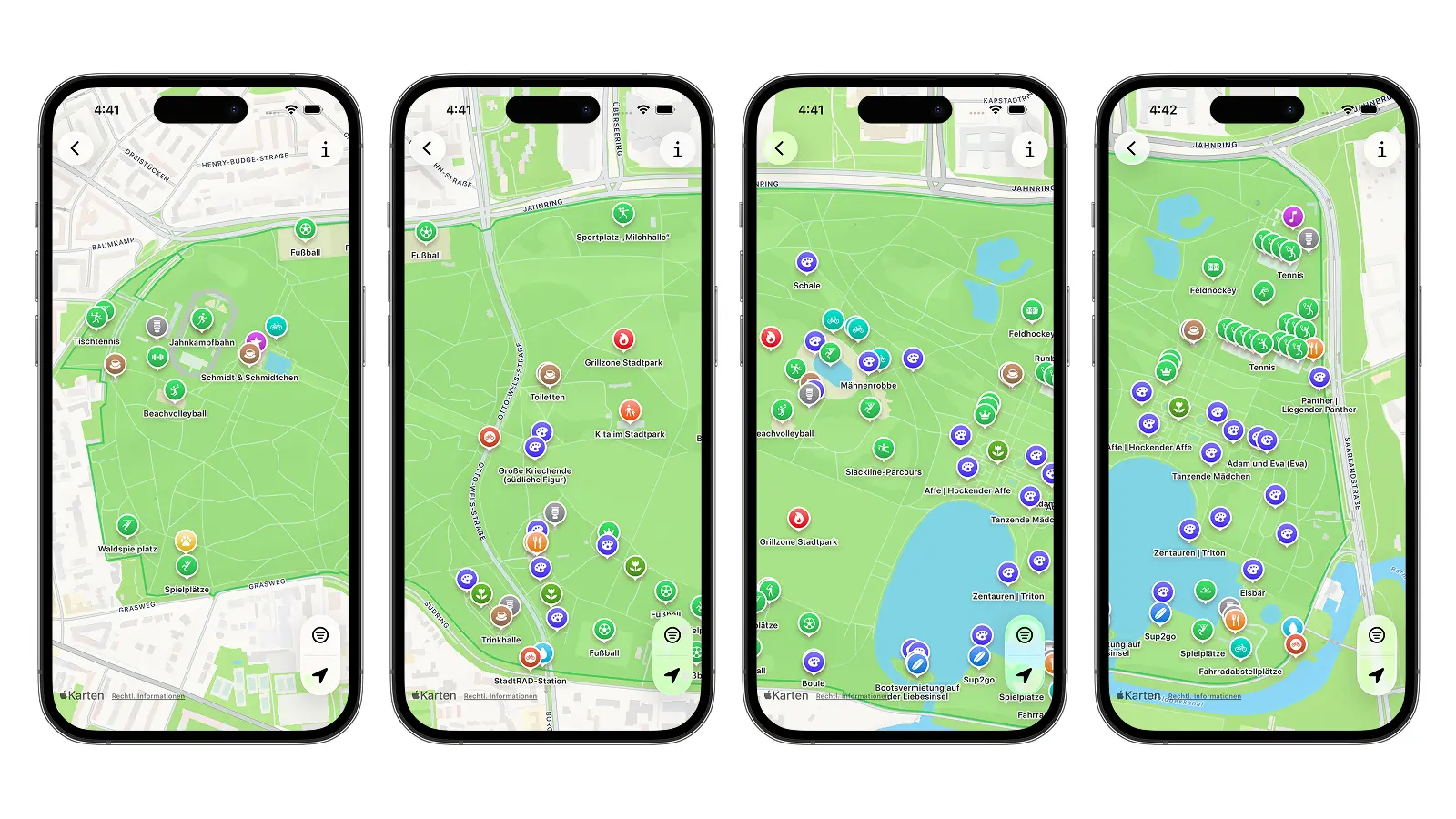
As a regular user of the park, I feel like the amount of water taps, toilets and bike racks is not enough. Also, not many cultural events happen there. It would be nice to have something like an open air cinema, which you can find in different parks in the city. Or theatre.
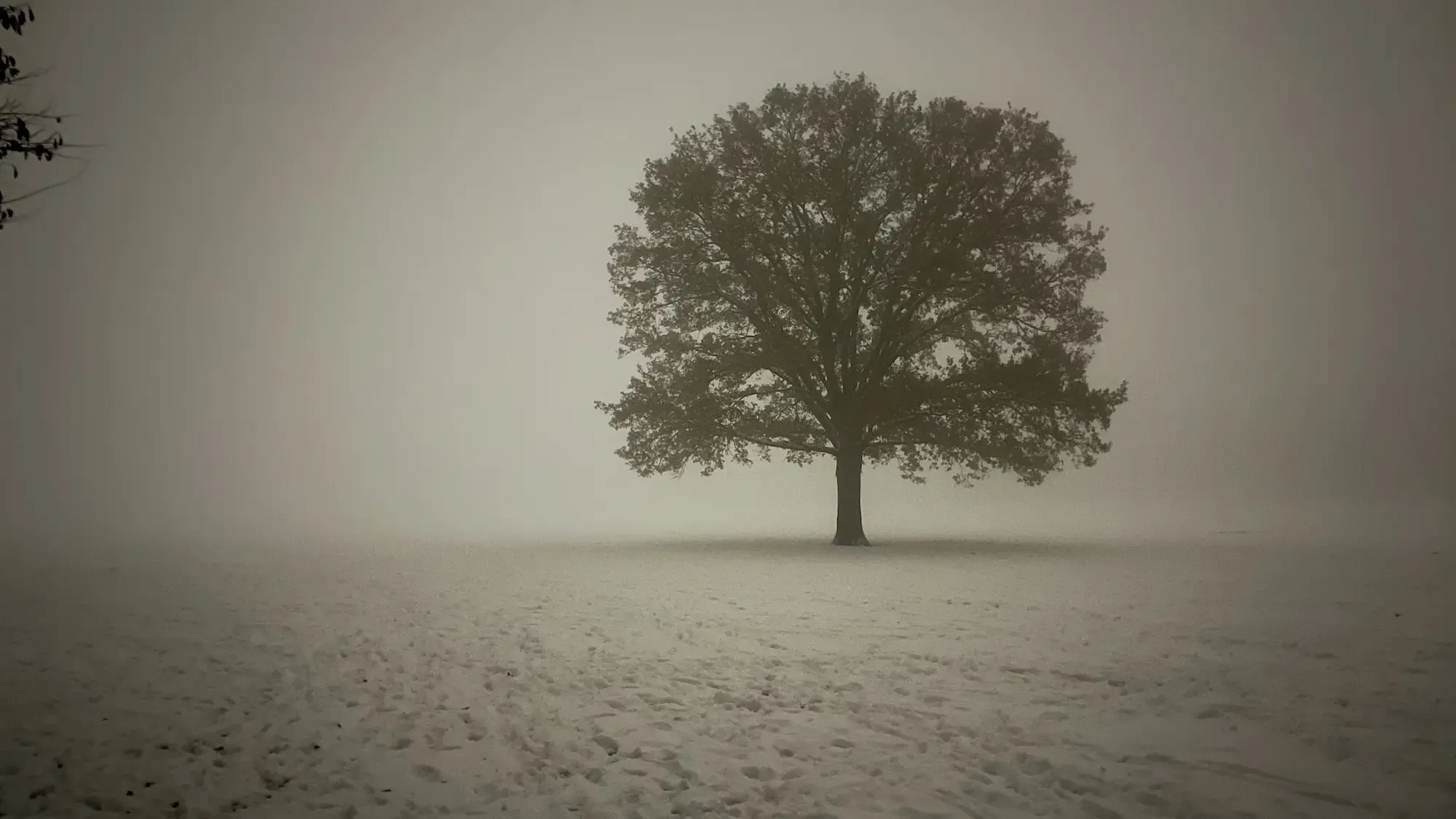
I also feel like during the winter, even though the park looks amazing under snow or fog, there are not many things to do. I am not sure what the city can offer, but when I think about the crammed Christmas markets in the city, the park could probably host the biggest Christmas market in Hamburg, along with different activities.
That would also fit what the park was for in the first place. It was built so people would use it, and at the moment it only really manages that for half the year.