Shared mobility is great. The parking isn't.
Hamburg has great transport options, but shared micro mobility still has one problem the city hasn't solved.

Nowadays there are many ways to get around Hamburg. You can take the U-Bahn or S-Bahn, use HVV buses, ride your own bike, rent one from StadtRAD, book a MOIA, or use one of the shared micro mobility services to rent an e-scooter, e-bike, or even an e-moped.
I really like that we have so many transportation options. Even though Hamburg is still mostly designed around cars, and cars get much more space than everyone else, it is great that people have alternatives. But there is one thing that really annoys me: shared micro mobility services and the way many people use them.
If I remember correctly, e-scooters became popular around the COVID pandemic, and they have been part of the city ever since. Later, shared e-bikes and e-mopeds were added. Today there are several companies operating in Hamburg, including Voi, Dott, Bolt, Lime, and emmy.
I have never actually used any of these services. I have been cycling in Hamburg since I moved here eight years ago, so I have never really needed them. The reason they annoy me so much is directly connected to the fact that I am a cyclist.
When e-scooters first became popular, there were many complaints. Riders often used them in places where they were not allowed, such as sidewalks instead of bike lanes. There were also many accidents. In 2025, the number of e-scooter accidents causing injuries increased by 26,4% to 757, the highest number since records began in 2021. Among people aged 18 to 54, the number of injured e-scooter riders also increased by 17,9% to 495. The growing number of accidents is one of the reasons why the federal government recently proposed making rental companies responsible for the damages.
The other complaint, which I believe is still far from solved, is where these vehicles are parked. After finishing a ride, many people simply leave them wherever they want. Whether they block a bike lane or a sidewalk does not seem to matter. It reminds me of people who throw trash on the street or in parks. Instead of taking a few extra seconds to leave the vehicle in a sensible place, they leave it wherever it is most convenient for them, even if it blocks someone else's way.
Here are a few examples.
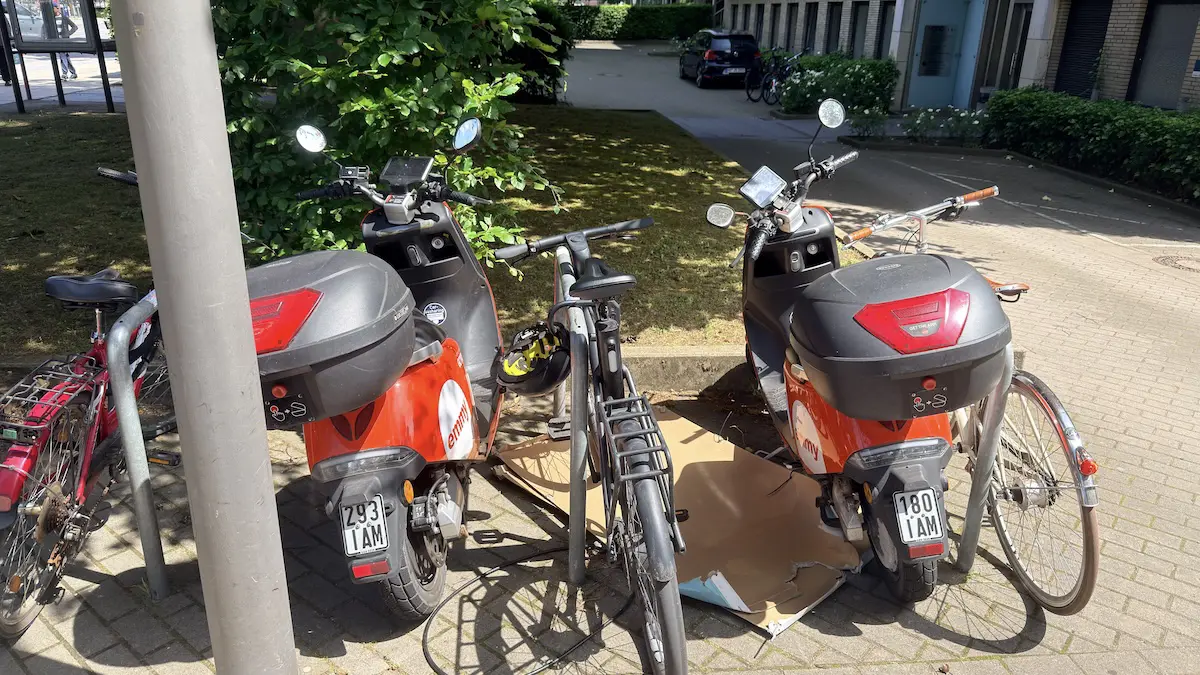
This photo was taken at Wandsbek Markt. As you can see, several emmy e-mopeds were parked right next to the bike racks. I do not know whether they were left there by riders or moved there later, but they clearly do not belong there. Bike racks are meant for people to lock their bicycles, not for parking shared mopeds that already have their own locking system.
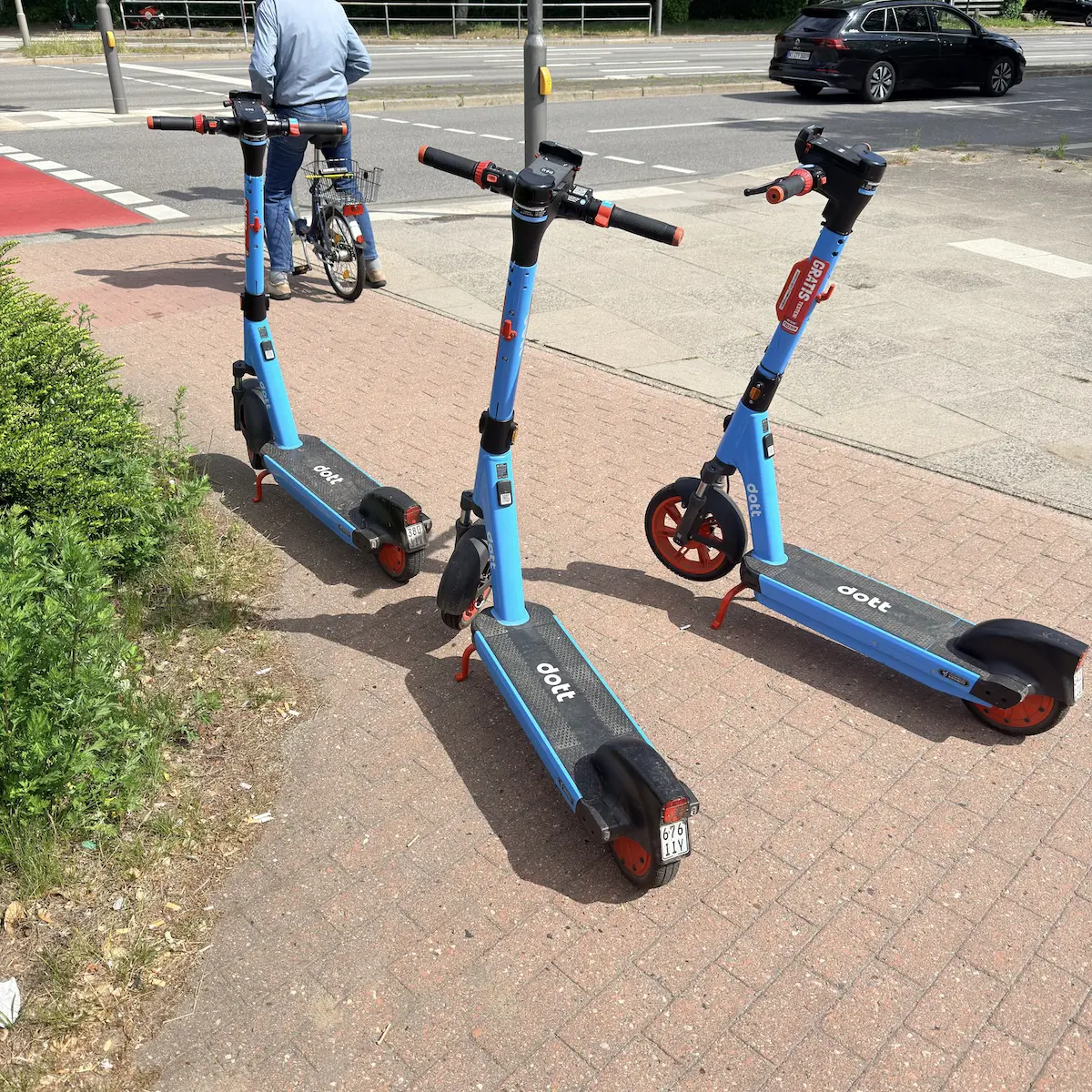
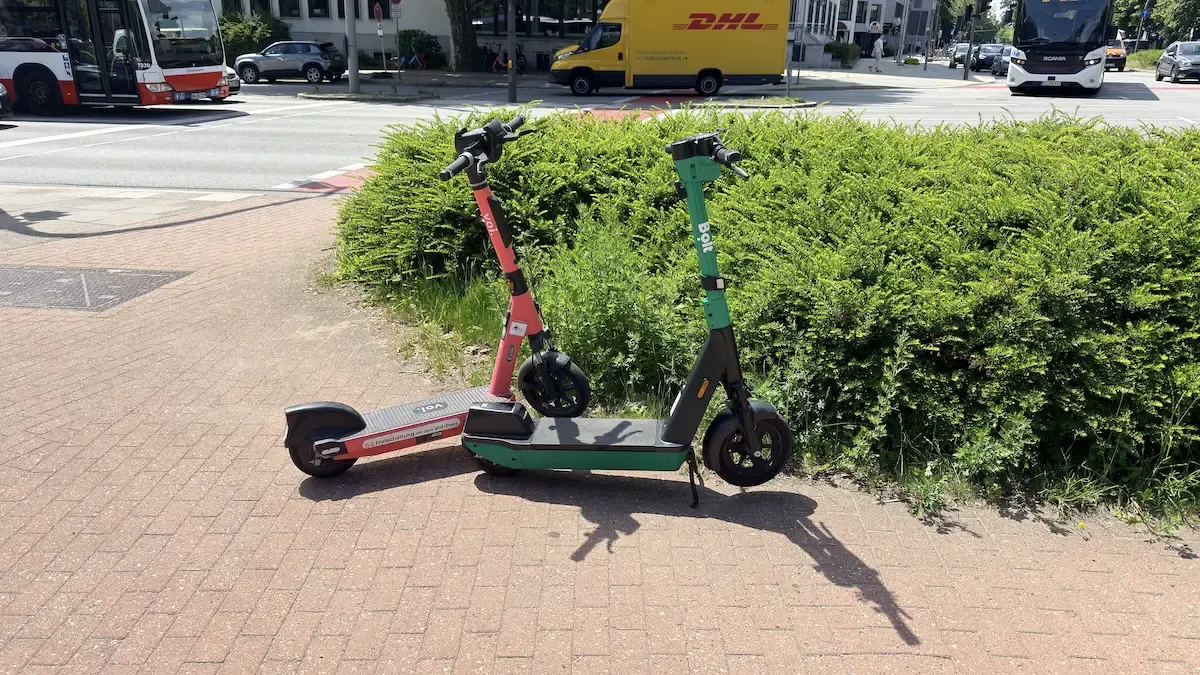
This photo was taken at the intersection of Schloßstraße and Ring 2. What annoys me is not only that the scooters were left on the bike lane, but also that they created a safety risk. They were parked right next to a corner, partly hidden by bushes, making them easy to miss while turning.
You might think this was just a one-time situation. But when I passed the same location two weeks later, there were scooters from different companies parked in exactly the same place.
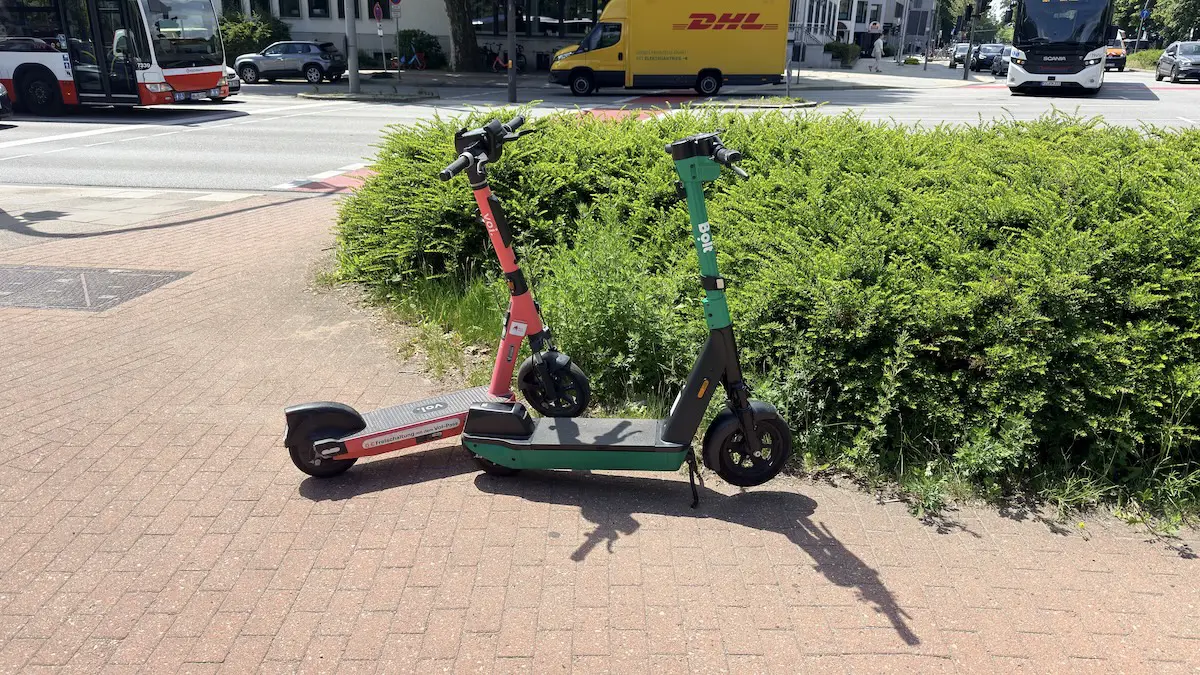
The next photo was taken on St. Pauli Hafenstraße. Someone simply left an e-bike directly on the bike lane.
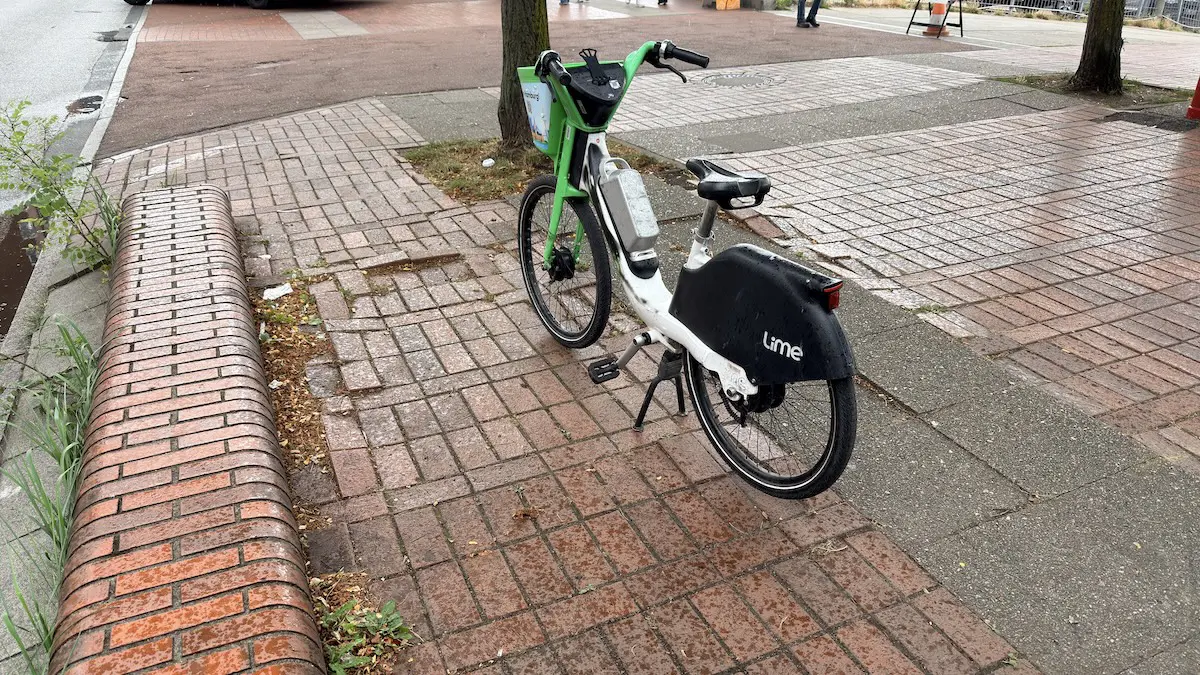
The next photo was taken in the Treppenviertel. I honestly do not know what the riders were thinking. They apparently got close to the stairs, realized they could not continue, and simply abandoned their scooters in an already narrow passage.
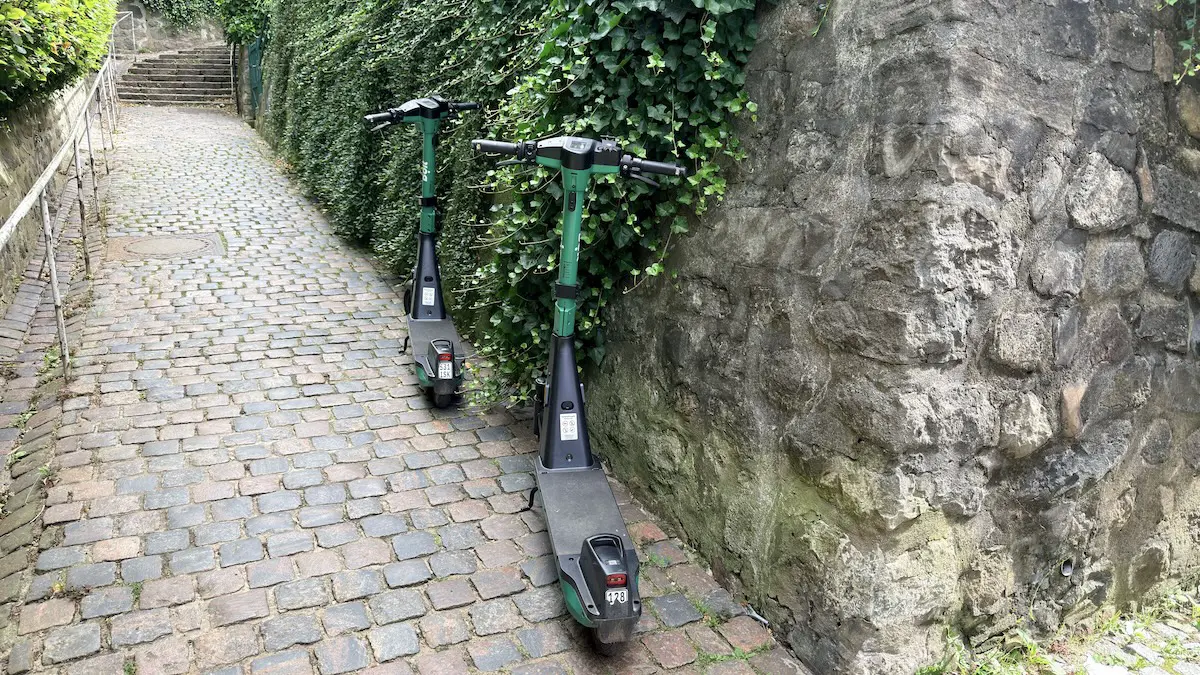
These are only a few examples that I happened to photograph. During my daily rides around Hamburg, I see vehicles blocking bike lanes and sidewalks almost every day.
Three months ago, Anjes Tjarks, Hamburg's Senator for Transport and Mobility Transformation, shared a LinkedIn post announcing that the city had introduced 370 digital parking spaces for e-scooters at 100 busy locations. At first, I thought this would finally solve the problem. Unfortunately, the photos in this article, including the oldest one which is less than two months old, show that the problem still exists.
The city's approach was to create restricted areas in popular parts of Hamburg, such as Jungfernstieg, Schanze, and Alsterpark. Inside these (red) areas, riders can only end their rental in designated parking spots (blue dots). The locations are shared with the rental companies, which use geofencing to prevent people from ending their ride outside the marked areas.
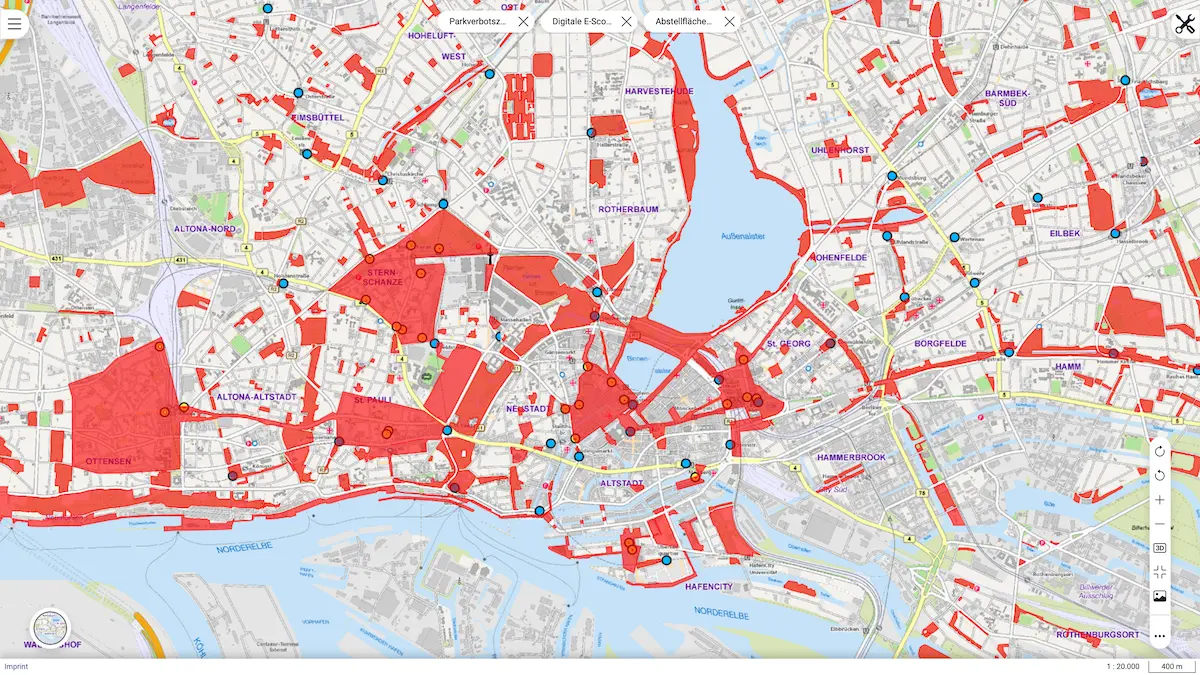
It sounds like a good idea, but it only works inside those restricted zones. The location where I took the second photo was outside one of these areas, which meant people could still leave their scooters on a bike lane without any restriction.
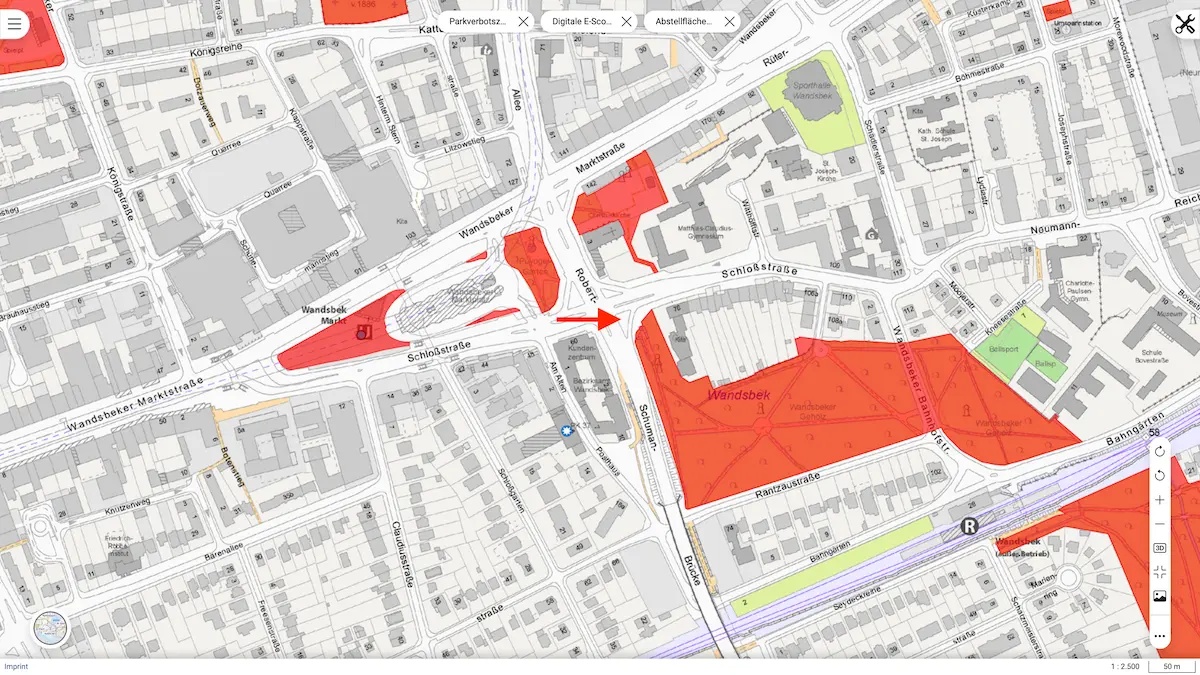
I think the city should have taken the opposite approach. Instead of creating a few restricted areas with designated parking spots, it should have created designated parking spots across the city and only allowed rentals to end there. Everywhere else should be off limits. I honestly do not understand why this option was not chosen.
We already have a good example in Hamburg. StadtRAD has been operating since 2009, and I rarely hear people complain about bikes being left everywhere. The reason is simple. StadtRAD bikes have to be returned to their stations. If you leave one somewhere else, you pay a 10€ fee. That system has been working well for more than a decade.
Shared micro mobility services can be a great addition to public transport, and I do not want them to disappear. But if companies are allowed to place thousands of vehicles across the city, they should also make sure those vehicles do not become obstacles for everyone else. Right now, too much of the responsibility falls on pedestrians and cyclists, who have to deal with the consequences every day.