
Why does Apple have an office in a small town close to Hamburg?
This was the question I had after reading a job ad on Apple's jobs page.

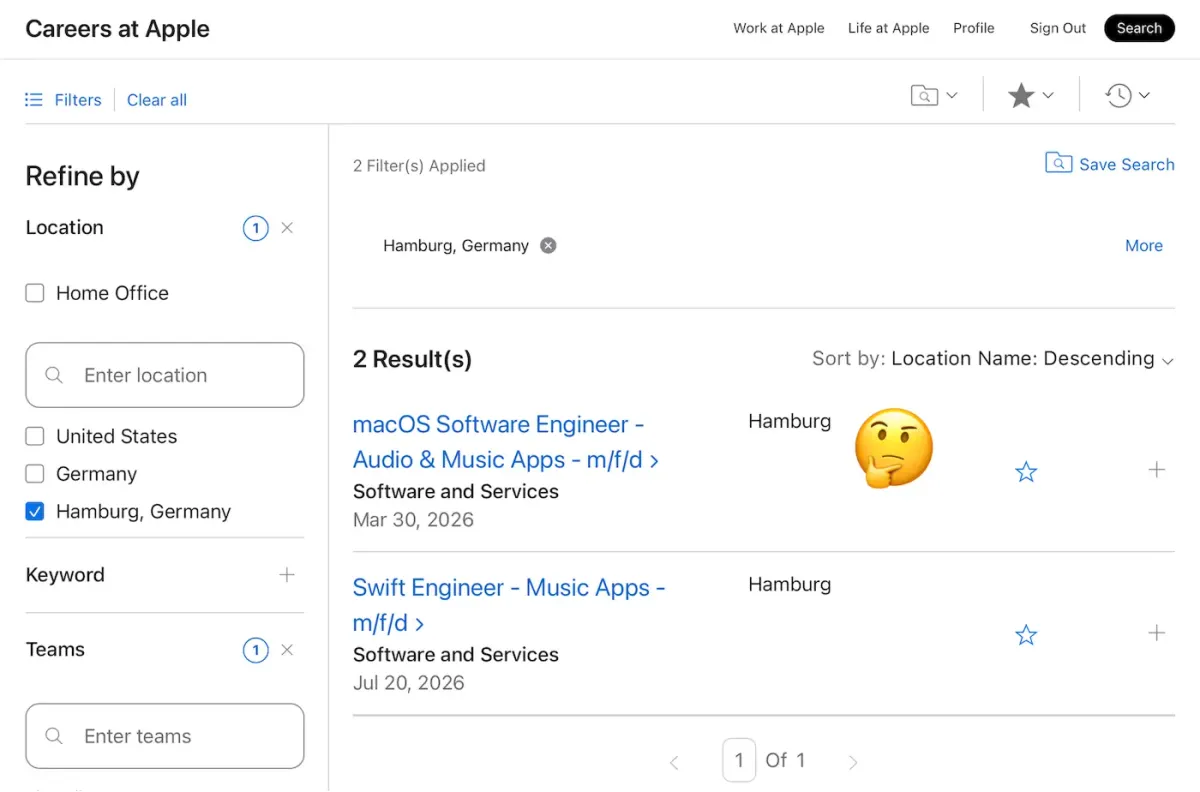
I started following everything about Apple when I was 15, and around the same time I picked up the habit of checking Apple's jobs page every now and then, just to see if there was an interesting position for me. The other reason is that job ads quietly tell you something about what Apple might ship in the future.
I still do this. Not because I want to move to the US and work for Apple, but because maybe one day there will be a position in Berlin that doesn't require sitting in an office every single day. That is how I ended up reading a job ad like the one above: a software engineering position in Hamburg.
I was surprised. Like I said, I have been following Apple for a long time and I had no idea that Apple had an office in Hamburg. Sure, there are two Apple Stores in the city, so there are always openings, but those are retail jobs, not software or hardware development.
What Apple actually does in Germany
Apple has been in Munich since 1981, and today it is the company's biggest engineering hub in Europe. It grew a lot after Apple bought the majority of Intel's smartphone modem business in 2019. Funny enough, that business was originally German anyway: Intel had bought it from Infineon. When the C1 arrived, Apple's first self designed 5G modem, a big part of the work behind it had been done in that office. That explains all the Munich job ads about wireless technologies.
Then there is Berlin, where I went in June for a special event as an indie developer. A lot of people work there, but mostly on things around the app business and marketing. I do run into Apple developers based in Berlin, but as far as I know there is no dedicated software unit in the city. Apple did announce in June that Europe's first Apple Developer Center will open in Berlin Mitte later this year, but that is a place for developers to visit, not an engineering office.
It wasn't Hamburg, it was Rellingen
So that is why the job ad confused me. And when I actually read the description, I realised the position wasn't really in Hamburg. It was in Rellingen.
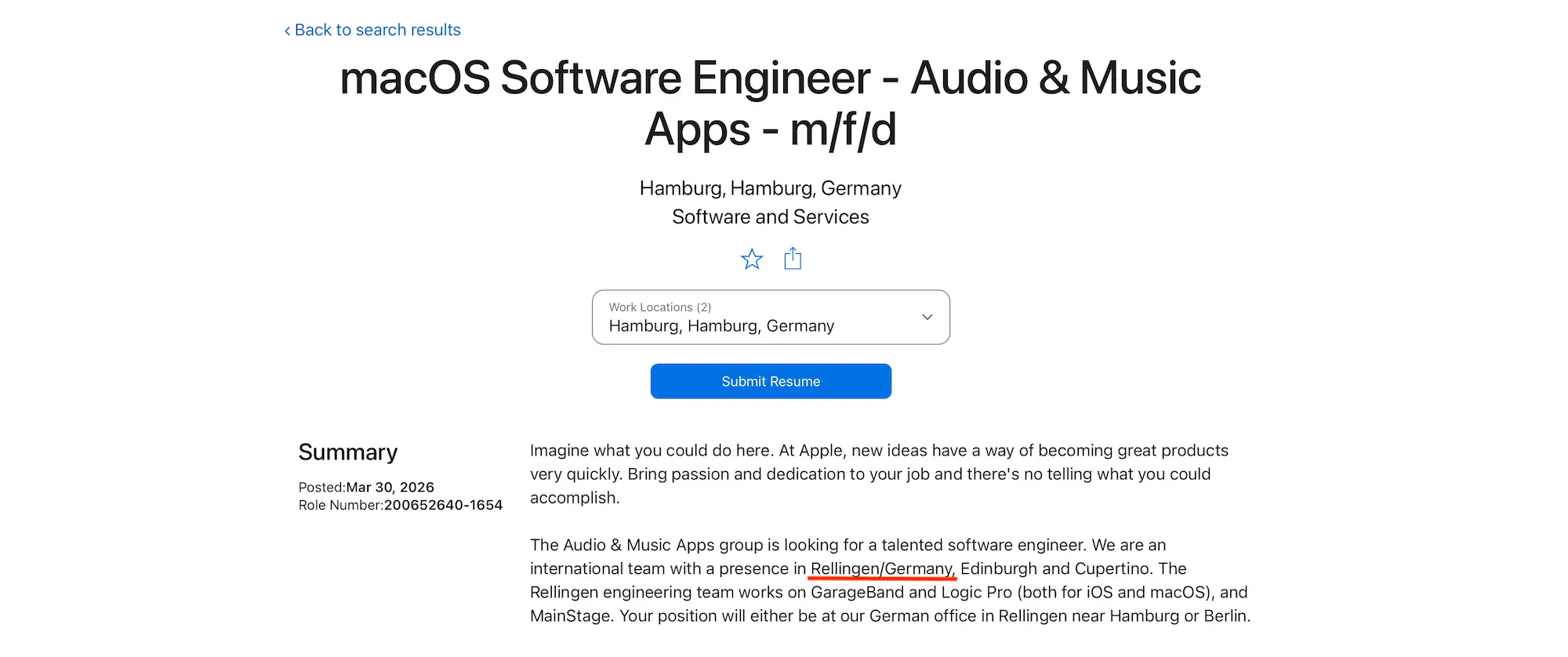
Until that moment I had never heard of Rellingen. I opened Apple Maps and searched for it. It turned out to be a small town in the district of Pinneberg in Schleswig-Holstein, about 10 km northwest of Hamburg, roughly an hour from my place by bike. Around 15.135 people live there. Its most famous building is a Lutheran church from the 1750s with an unusual octagonal shape.
The ad said the team in Rellingen works on GarageBand, Logic Pro and MainStage, on both macOS and iOS.
If you don't know these apps, they are for making music. GarageBand is the friendlier one, for people who are new to it and want something simple. It is quite powerful, but not as powerful as Logic Pro. Logic Pro is where professionals work. The clearest example is Finneas, who produced Billie Eilish's Grammy sweeping debut album in a bedroom in his parents' house using Logic Pro. Plenty of other names show up in the same lists, from Ed Sheeran to David Guetta.
So the obvious question is: why is Apple building Logic Pro and GarageBand in a town of 15 thousand people? A few searches later I had the answer. Logic was never Apple software to begin with. Apple bought it, together with the company that made it, Emagic.
Emagic
It started with two students in Hamburg. Gerhard Lengeling was studying medicine but spent his real energy on MIDI, and Chris Adam came from the computer science side. Together they wrote a sequencer for the Atari ST, which had MIDI ports built in and was the machine musicians actually used back then. It came out under the name C-Lab in the late 80s.
In late 1992 the two of them split from C-Lab and founded their own company in Rellingen: Emagic. The name is just "electronic" and "magic" pushed together. This time Lengeling wrote something new from scratch, because his earlier programs had died together with the machines they were written for. That program was Notator Logic, which arrived on the Macintosh in 1993 and later dropped the Notator part of the name.
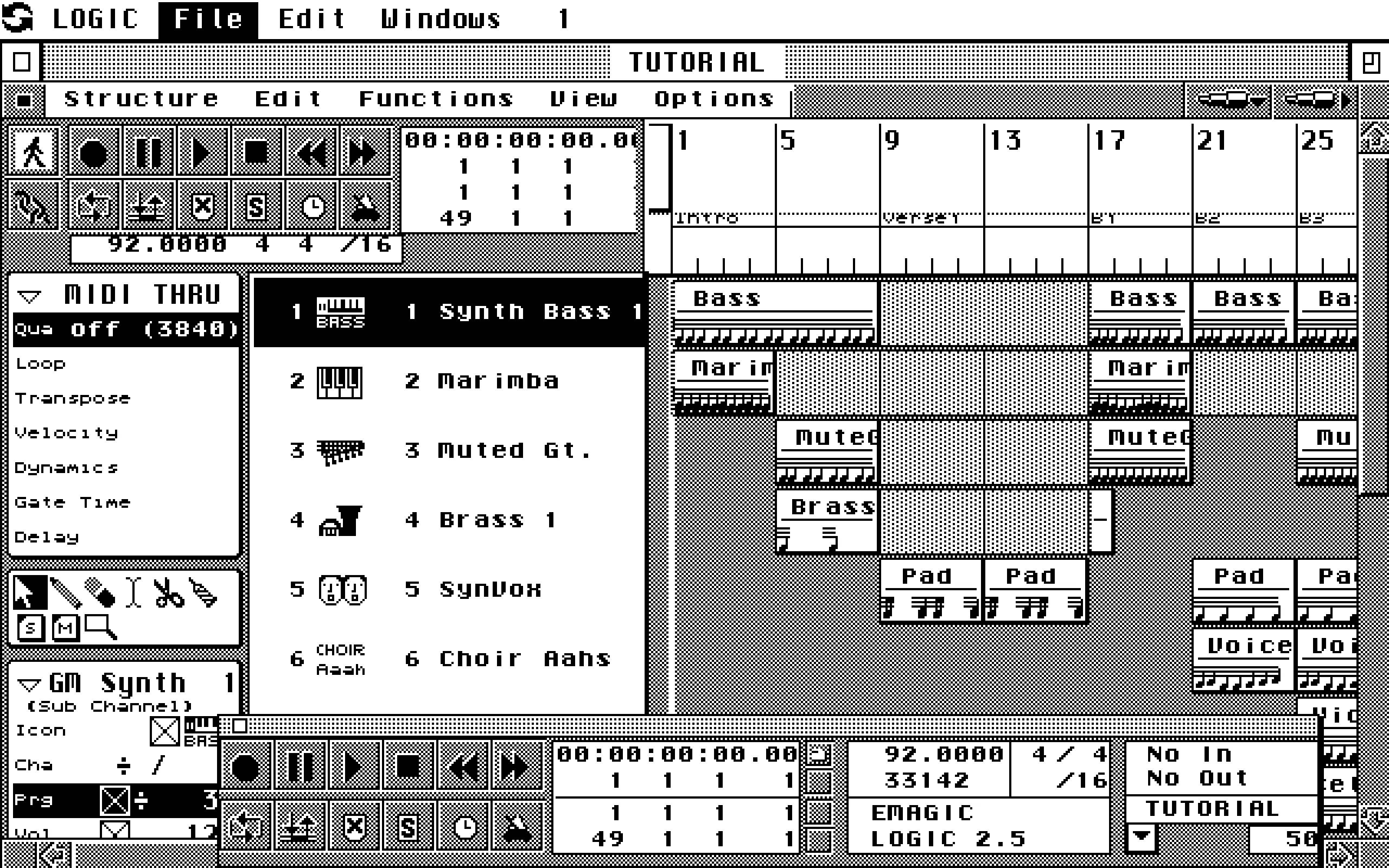
Apple bought Emagic in 2002 and the Emagic name was gone by 2006. But unlike a lot of Apple acquisitions, the office stayed exactly where it was. I don't know the real reason. Maybe it is simply hard to find good software developers who are also good musicians, and this team had spent a decade collecting exactly those people. What I like most is that both founders are still at Apple. Lengeling is Senior Director of Software Engineering for Musical Applications, though he moved to California. Chris Adam is still there too, and according to his LinkedIn he is still based in the Hamburg area.
Imagine writing software more than thirty years ago that is still used to make music heard by millions of people. That kind of satisfaction must be enormous. And you are doing it from a small town, or from Hamburg, cycling to the office. Probably the perfect combination of working for a tech company that has billions of users while living in a beautiful city like Hamburg.
Are they still looking?
One thing I noticed is that I saw this job ad years ago and I don't remember Berlin being mentioned back then. Now the ads say the position can be in Rellingen or in Berlin. Either they still can't find the right person for Rellingen, or the team is growing.
I think it is the second one. In January Apple introduced Apple Creator Studio, which bundles Logic Pro along with other professional tools like Final Cut Pro into one subscription. Instead of paying around 230€ once for Logic Pro, you can try it for 12,99€ a month, or 2,99€ if you are a student. That is a very good deal, and it means a lot more people are about to open Logic Pro for the first time.
So if you write Swift for Apple platforms, you are into music, you play an instrument, and you live in Hamburg or have been thinking about it, this might be your chance to work on something people actually make things with.
If my programming expertise was on Swift and I was able to play an instrument, I would have already applied for this position.
Hamburg made another music standard
The other thing I recently stumbled upon is that VST turned 30 this year, and it also comes from Hamburg. It was made by Steinberg.
Karl "Charlie" Steinberg, a musician and studio engineer, met keyboard player Manfred Rürup at a recording session in 1983. A year later they founded the company in Rürup's apartment, together with his wife Nicole. The company is called Steinberg and not Rürup because they thought Americans would never manage to pronounce Rürup. Their first product was Pro-16, a 16 track MIDI sequencer for the Commodore 64, followed by Pro-24 for the Atari ST. Cubase came in 1989.
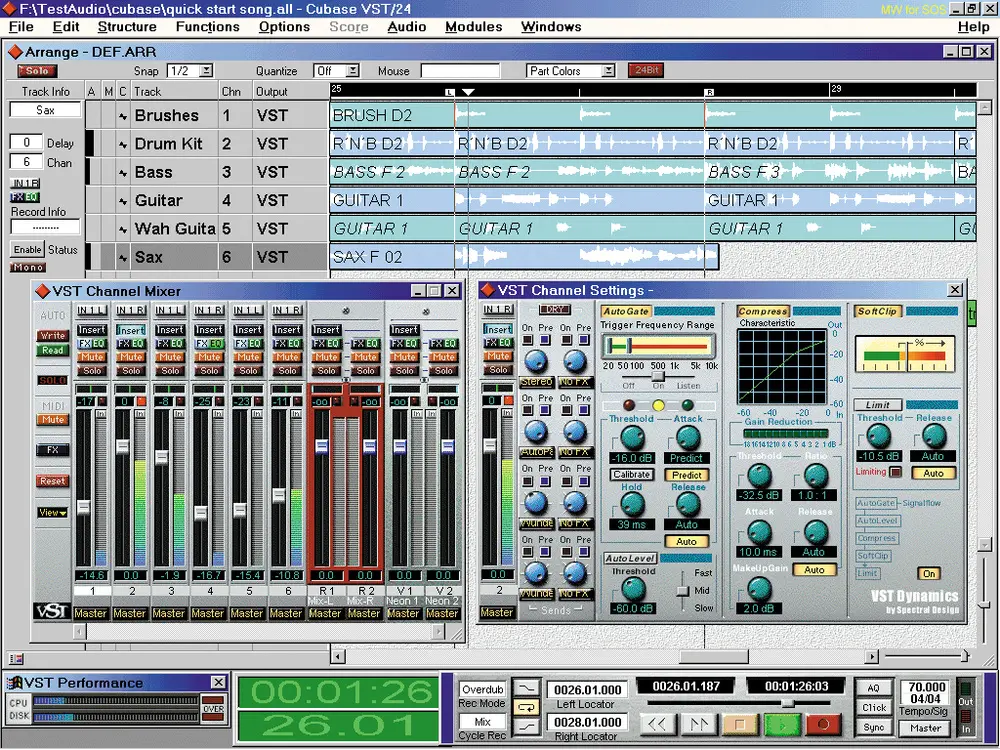
Then in 1996 they shipped Cubase VST. Virtual Studio Technology let you load audio effects directly into the software and process them in real time with the computer's own power, instead of buying a rack of hardware. In 1999 version 2.0 added virtual instruments. Steinberg published the SDK and let anyone build on it, and that is why VST became the standard that basically every music program supports today. They did the same thing a year later with ASIO, the low latency audio driver protocol on Windows, which is also still the standard.
And like Emagic, Steinberg was eventually sold. It went to Pinnacle Systems in 2003, and Yamaha bought it from them in 2005. It is still based in Hamburg and still makes Cubase, Nuendo and Dorico.
So within a few years, two companies from Hamburg and its outskirts produced software that ended up shaping how music is made everywhere. I don't really know what the zeitgeist of the early Hamburg music tech scene was. I wonder if these people knew each other, whether they were sitting in the same bars, and how these companies came together. And I wonder whether that same spirit is still around somewhere in the city, maybe not in music software, but in something else.
If you were around Hamburg back then and have stories from that time, please reach out. And if you know a documentary, an article, an old interview, anything from those years, I would love to read or watch it.