Hamburg Spent 2.5 Million Euros to Convince You. Did It Work?
On May 31st, Hamburg votes on whether to host the Olympics. The YES side wants you to feel excited. The NO side wants you to think.

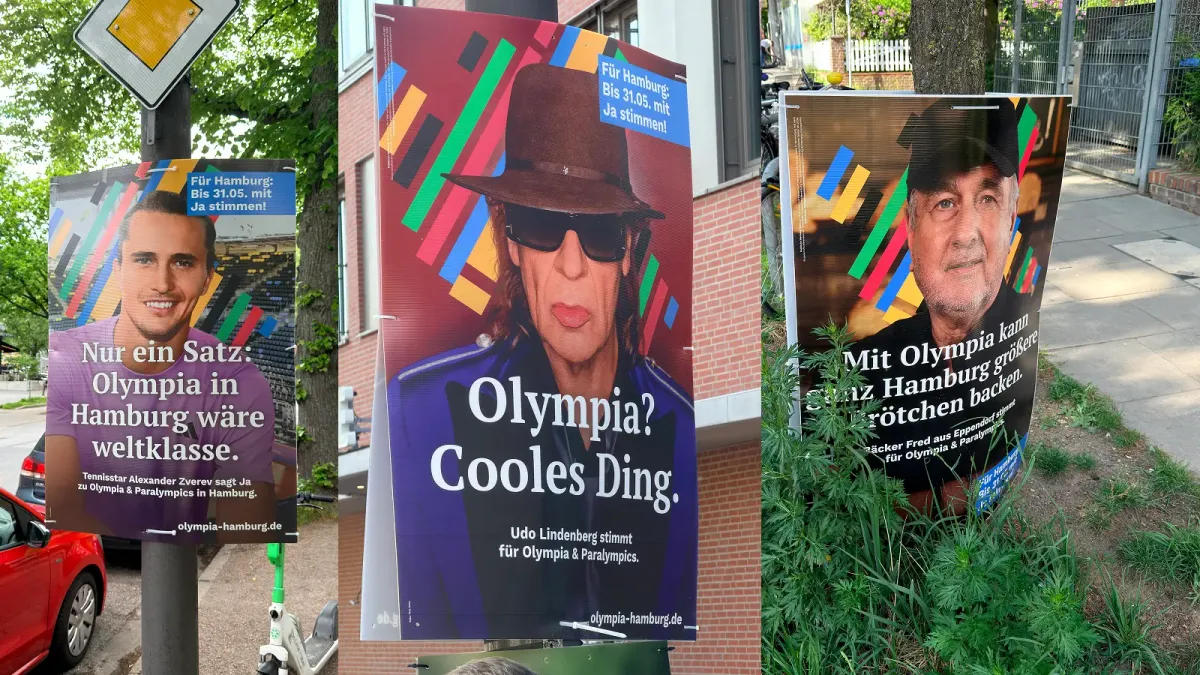
Nowadays, one of the hottest topics in Hamburg is the upcoming referendum for the Olympics. The current coalition government, which consists of Social Democrats and Greens, wants to apply for one of the upcoming Olympics in 2036, 2040 or 2044. Before doing that they need to get the approval of the citizens in Hamburg and that's why you're seeing a bunch of posters around the city.
"Just one sentence: the Olympics in Hamburg would be world-class." says professional tennis player Alexander Zverev.
"Olympics? Cool thing." says Udo Lindenberg, singer, composer and painter.
"With Olympia, the whole of Hamburg can bake bigger bread rolls." says a baker in Eppendorf.
You also see sentences like "YOUR YES makes dreams come true!" and "YES, I WANT to experience golden moments!" on other posters.
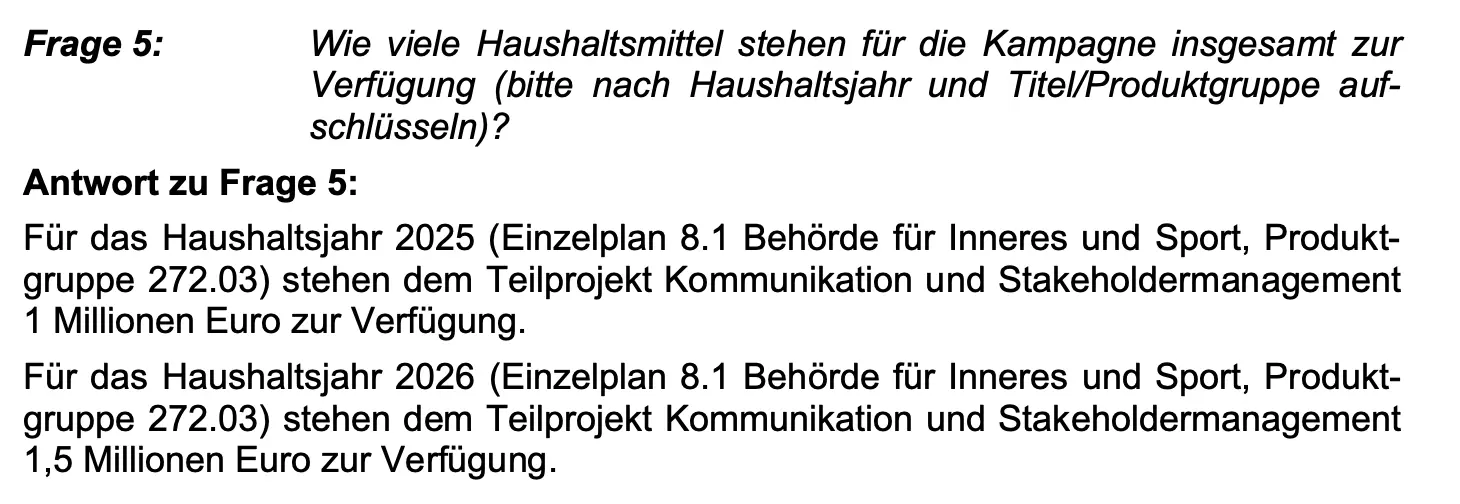
I'm not a marketing expert, but I watched the whole Mad Men series and read a couple of books. I can say that this is not the most convincing public marketing campaign I've ever seen, and it is funded by taxpayer money. Thanks to parliament member Antje Müller-Möller (CDU), we know that the state allocated 2.5 million euros in total for this campaign (1 million in 2025, 1.5 million in 2026). When I look at these posters, I don't really see why I should vote YES.
On the other hand, when I look at the NO side of the referendum, which is mostly funded by The Left party and donations to the NOLYMPIA campaign, I see a different picture.
"The Olympics will cost us at least 6.000 million euros. Hamburg could use the money better: for mobility for all, for permanent sports promotion, for affordable rents and much more." says the poster from The Left party.
"Billions of euros for 30 days of spectacle. Money which is missing for education, social welfare, culture and sport." says the NOLYMPIA campaign.
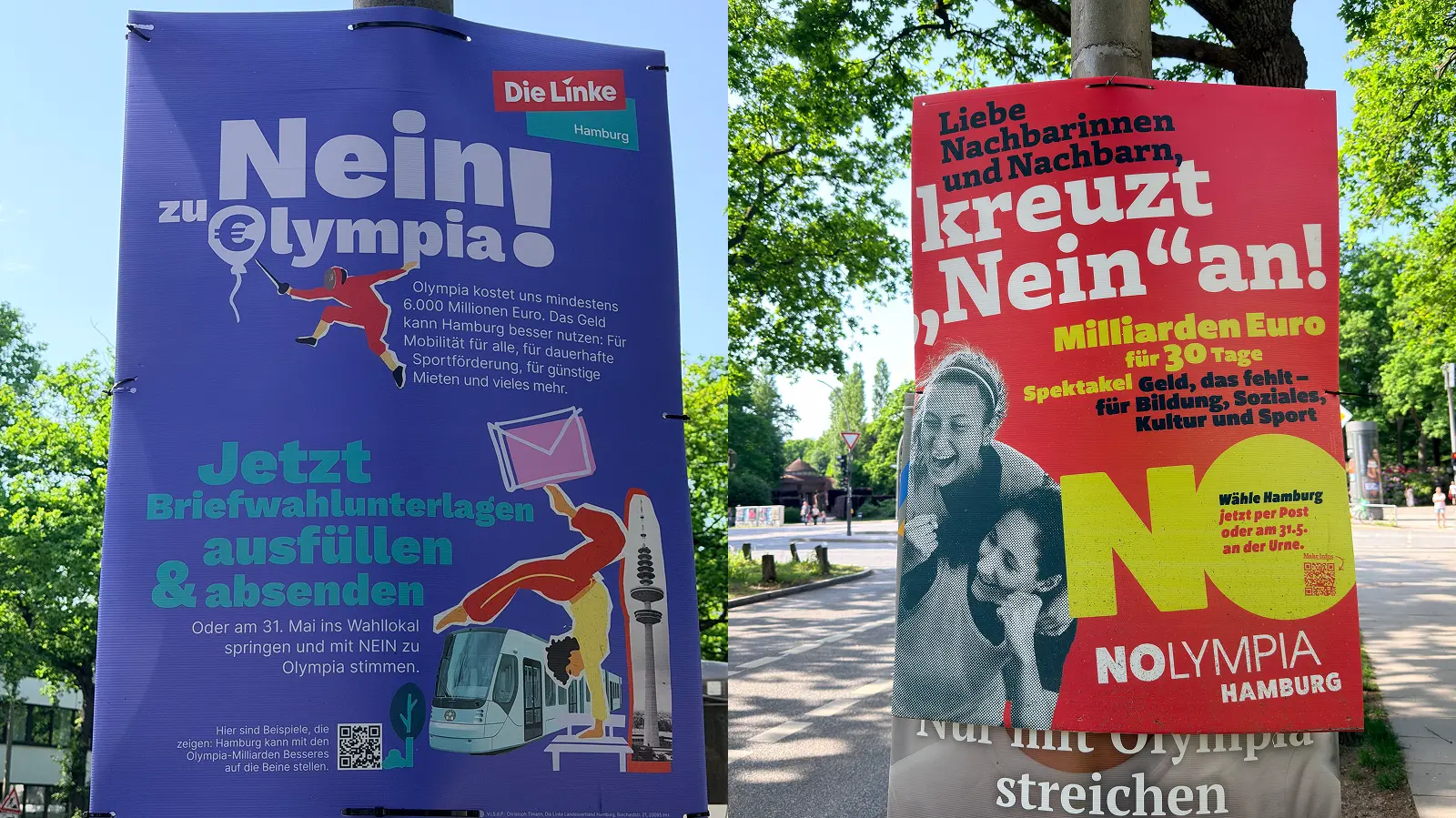
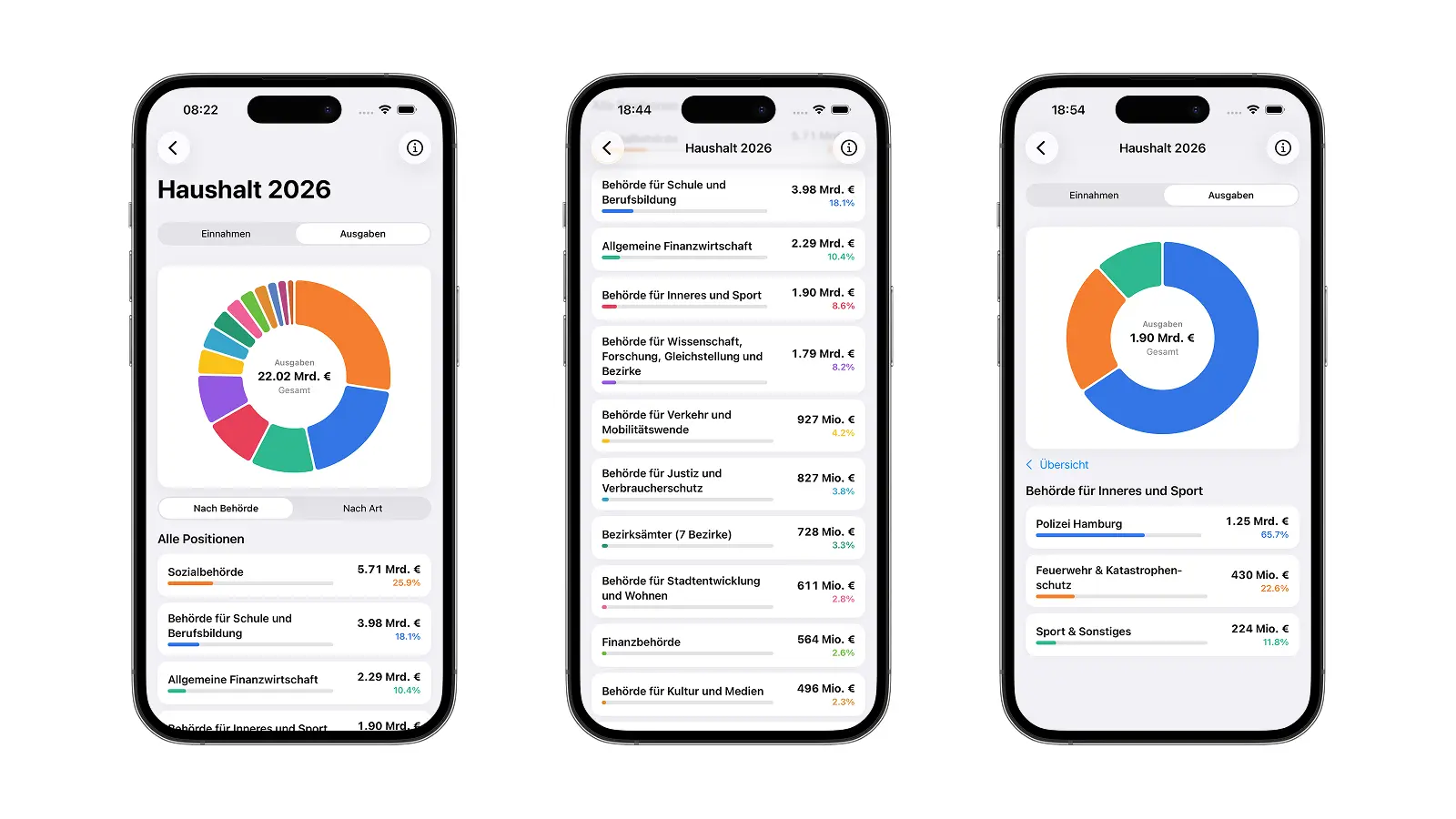
These two posters get straight to the point. The cost of the Paris Olympics was around 6 billion euros, so the number on the poster is right and easy to verify. When you look at the Hamburg State budget for 2026, you see numbers like:
- Agency for School and Vocational Training: 3.98 billion euros
- Agency for the Interior and Sports > Sports: 224 million euros
- Agency for Culture and Media: 496 million euros
That adds up to less than 6 billion euros. So Hamburg would spend more on a 30-day event than it spends on education, sports and culture combined in a full year. That's a convincing reason to vote NO.
On one side, you see people campaigning for the Olympics because it is cool, it will make the city world-class and let you experience golden moments. On the other side, you see numbers you can actually fact-check, and a clear picture of what that money could buy instead. That contrast is the most important part of this debate.
So why does the NO side put specific numbers on their posters while the YES side sticks to golden moments and world-class dreams? When I dig deeper into the YES campaign's own figures, I think I start to understand why.
The state predicts spending 4.8 billion euros and earning 4.9 billion euros back. Their argument is that the city will make a 100 million euro profit. The problem is that the margin is so thin that any cost increase turns the Olympics into a burden for taxpayers. I also think that's why the state doesn't include security costs in the budget. Security alone cost 1.4 billion euros for the Paris Olympics. Add that in and the project already looks like a loss.
On top of that, I don't know of any major project in Germany that didn't go over budget. And here the state is trying to estimate costs for an event happening in 2036, 2040 or 2044. Nobody knows what the economic situation in Hamburg or Germany will look like by then.
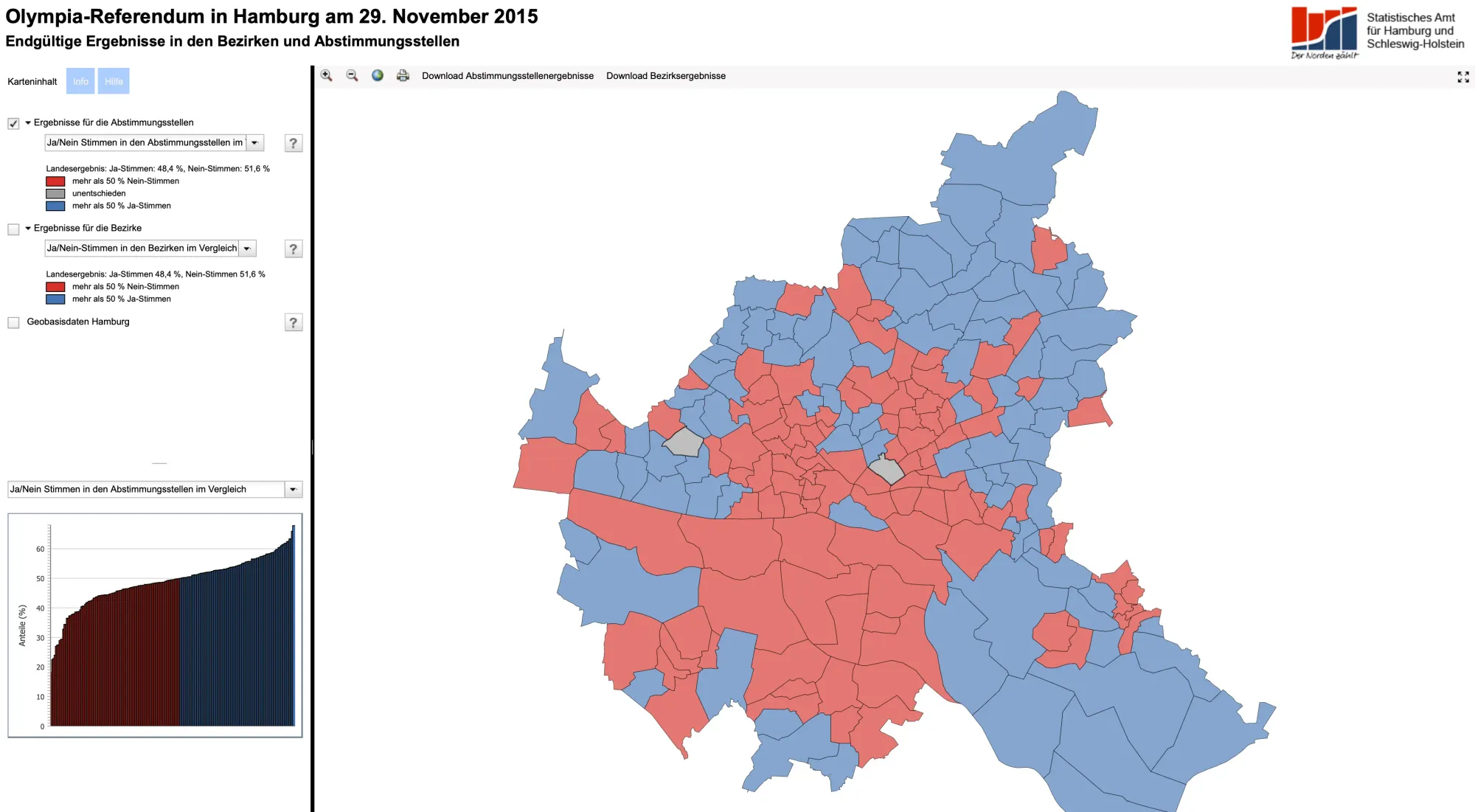
In 2015, Hamburg held a similar referendum for the 2024 Olympics. Only 48.4% voted YES, while 51.6% voted NO. The world was in a completely different place in 2015 compared to today, and that's why I'm really looking forward to seeing the results this time.
The referendum takes place on May 31st. Some people have already voted by mail. Unfortunately, I can't vote because my citizenship application has been sitting with the state for more than a year. The same state that found 2.5 million euros for this marketing campaign apparently doesn't have the budget to hire more staff at the Immigration Office.