The Coffee Belt Runs Through Hamburg’s Roasters
Hamburg’s coffee history is still alive in its local roasters, where beans from 31 countries find their way into the city.
I wasn't really into speciality coffee for a long time. I liked coffee, but I did not think about it that much. Then a friend told me about a coffee roastery in Hammerbrook. He said his colleagues could not stop talking about their beans. That place was Maya Kaffeerösterei.
I went there with the same friend and tried their coffee. That was the first time in my life I tasted hazelnut while drinking coffee. Until that moment, I realised that I had not really been drinking good coffee. And that's how my speciality coffee journey began.
After discovering good coffee, I started to try different cafes in Hamburg that offer speciality coffee. The more I tried, the more I wanted to have my own setup at home. I wanted to be able to drink the same kind of coffee without going to a cafe every time.
So I started to ask my friends who had been in the speciality coffee scene for years. After some research and a couple of videos from James Hoffmann, who is THE coffee guy on the internet, I finally decided on my espresso setup:
- SAGE Bambino Plus
- Baratza Encore ESP
- Timemore Black Mirror Basic 2
Since I enjoy drinking coffee with oat milk, I thought this setup would be perfect for me. I also liked that the machine could be ready in a few seconds. Some of my friends have machines where you need to wait like half an hour for the water to heat up. I don't have any patience for that kind of thing.
Learning What Coffee Really Means
After I had my espresso setup, it was time to buy beans. But before buying anything, I wanted to learn a bit more. Because once you get into the speciality coffee world, you realise that there are so many new things and words you need to know.
The origin of the beans, the type, how they were washed, how they were roasted, and so on. It is a real journey that never really ends, because the coffee world is always changing.
So I did what I normally do when I want to go deeper into a topic. I bought a book: The World Atlas of Coffee by James Hoffmann.
After reading the book, I started to understand why there are so many discussions on the internet about speciality coffee. You can really talk about it for hours. The brewing process, the origin of the beans, why coffee from some places is very expensive, and the fair trade side of it.
Especially that last part is one of the most important topics, because many people do not know where the coffee they drink comes from. When it is not clear where the coffee comes from, it is easier for bad things to happen in the industry.
The more you know about the origin of the coffee you drink, the easier it is to support farmers being paid fairly and the environment being protected. This is also one of the things that affects the final price. When beans are very cheap, there is a higher chance that workers were not treated well.
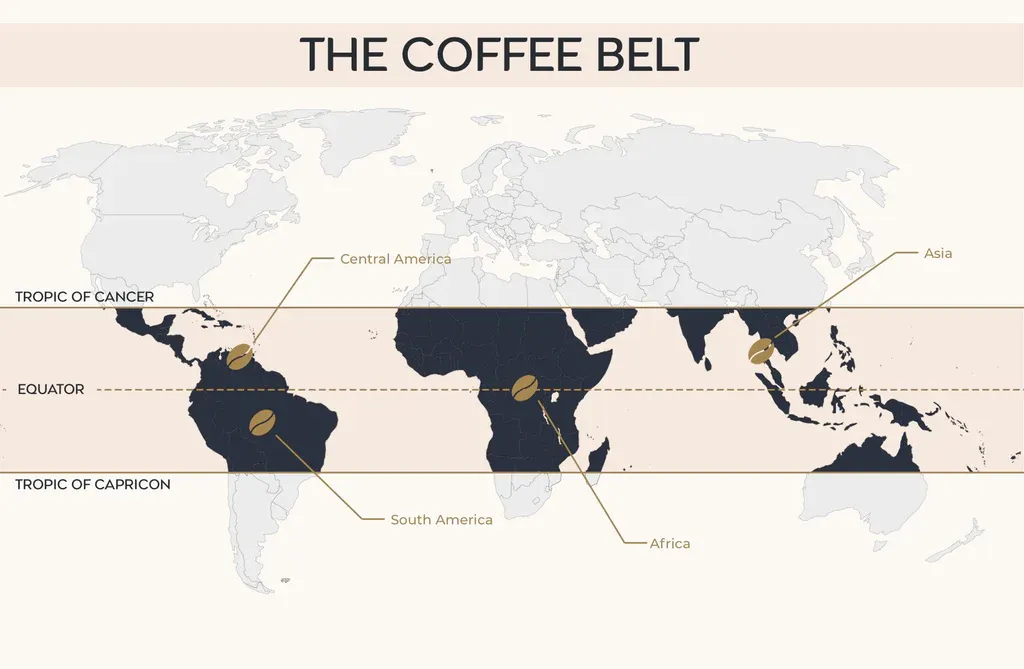
If you look at the world map, you can see that coffee grows in certain regions, known as the Coffee Belt. Many of those countries are not rich, and many of them do not have strong worker rights. So if you don't want to be part of this bad system, it is important to know where your coffee comes from.
After learning enough about the coffee world, it was time to buy beans. Until that point, my only reference was the coffee I had at MAYA, also known as Coffee Unlimited. So I bought my first beans from there, their famous No.3 Blend.
When I prepared the coffee at home for the first time, I was really surprised. I got almost the same taste I had when I tried it at their cafe. But this time, the cost of a single cup was way lower than what I paid there.
Of course, once you find beans you like, you don't just stop and buy the same thing forever. Since the options are endless, there is always a chance to find something new that you might like even more.
It is also important to know that one person's taste can be completely different from someone else's. So it is hard to say that beans from one roastery are the best, because another person might not like them at all. Or depending on how you drink your coffee, the same beans might taste a bit different.
That's why it is important to keep trying different beans. The more you try, the more you understand your own taste. That's what I started to do, and it quickly became one of my simple pleasures.
Hamburg’s Coffee World
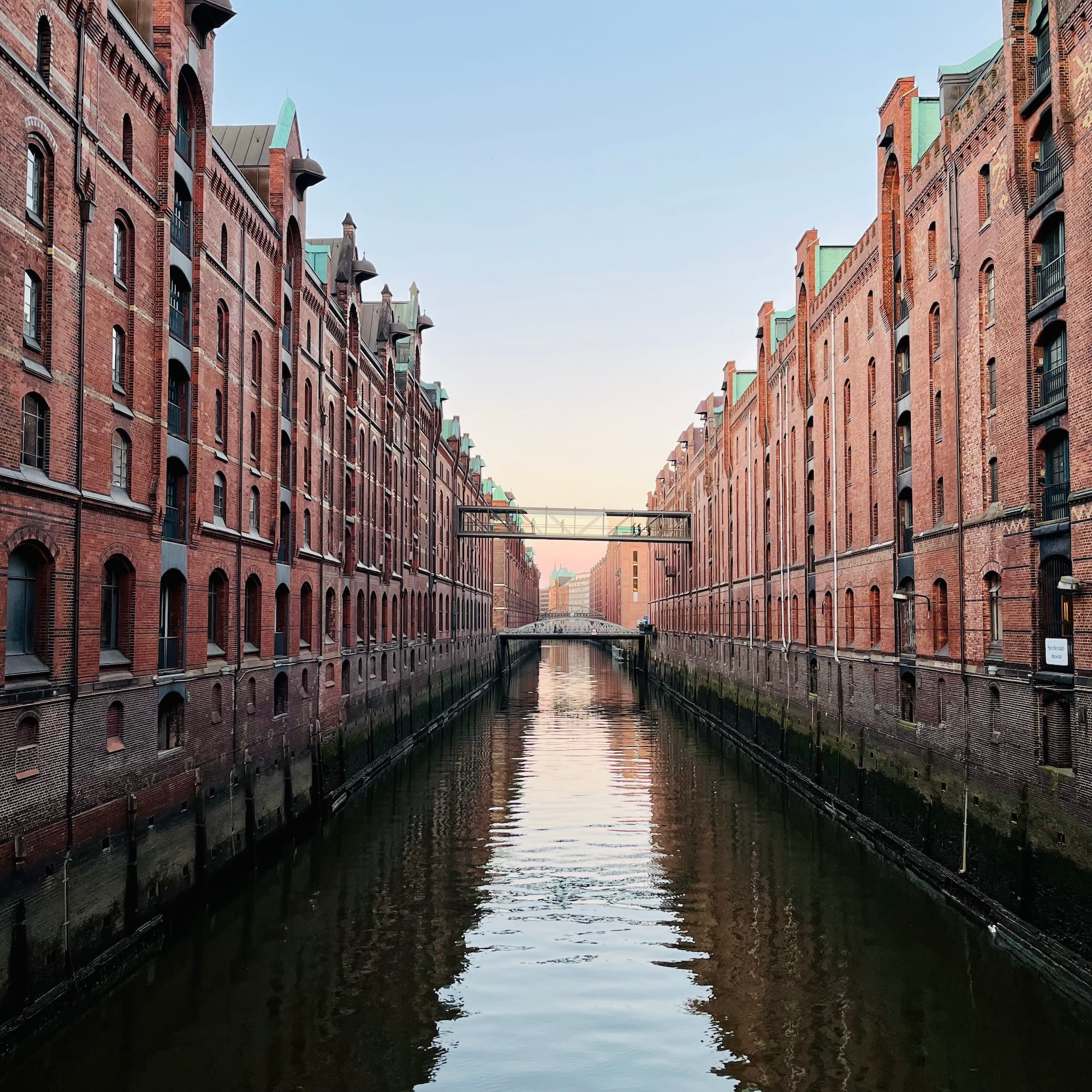
I know a bit about the history of Speicherstadt. I visited Speicherstadtmuseum once. There, I learnt that coffee trade was very important for Hamburg. It was big enough that in 1887, coffee was the main stored item in Speicherstadt, and Hamburg was handling 14% of the global coffee trade.
Nowadays, this number is around 8%, but Hamburg is still the world's largest coffee trading center, with roughly 700.000 tonnes of green coffee handled every year.
There is also a coffee museum in Hamburg, Kaffeemuseum Burg, which I still need to visit properly. The last time I was there, there was a huge line outside, so I had to skip it. I guess that is another sign that coffee is still a big thing in Hamburg.
Maybe because of this history, I realised that there are many coffee roasters in Hamburg. So I decided that instead of simply buying beans online like many people do, I wanted to try every single roaster in Hamburg.
So far, I bought beans from six of them:
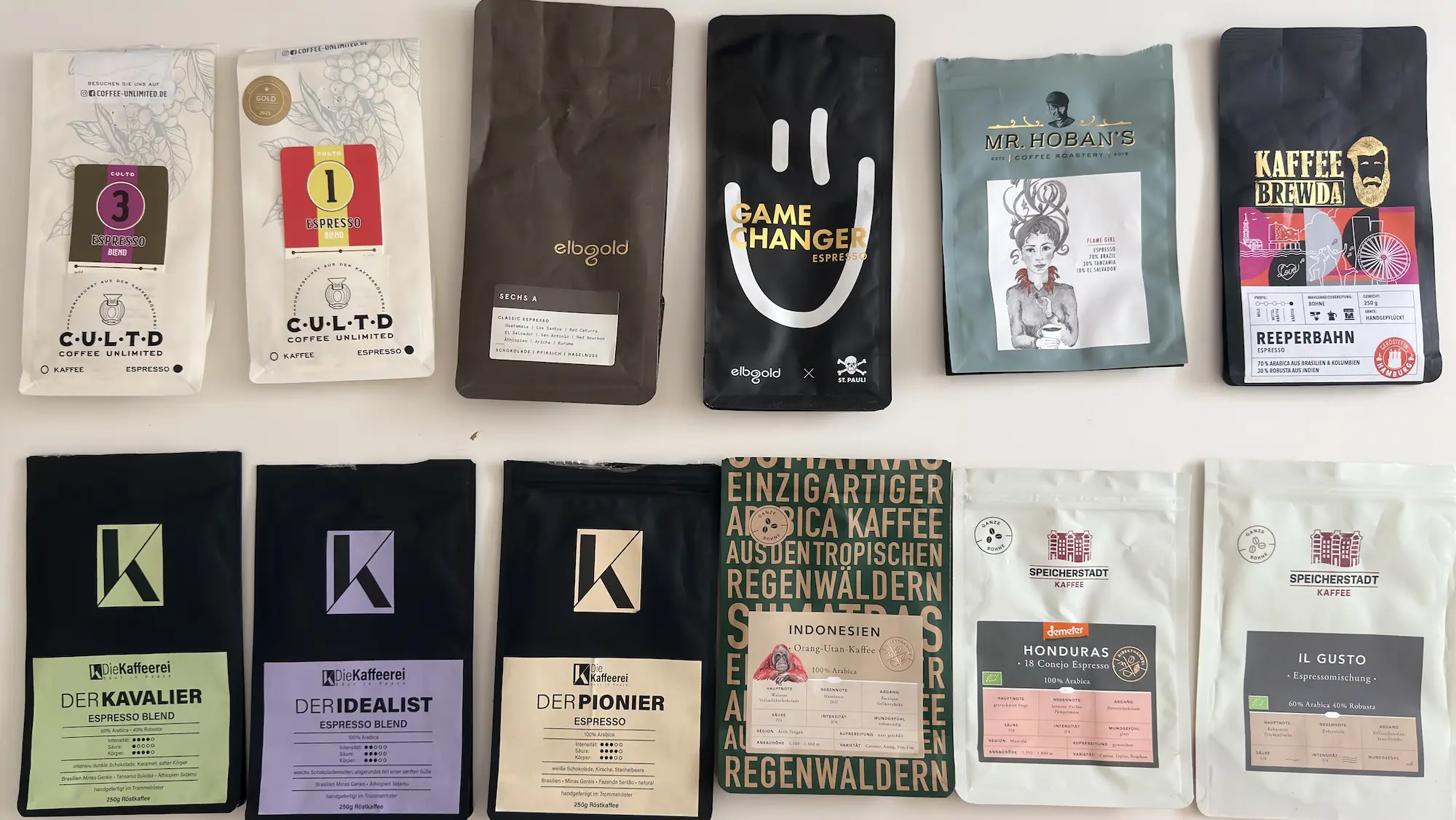
When I was building my Hamburg city super app Franzbrötchen, I also thought it would be nice to have a section for the coffee roasters in Hamburg, so more people could discover them. And I'm glad that I did that, because many people started to write to me about other local roasters that I had never heard about. Later, I also added them to the app.
Right now, in the coffee roasters section of the app, there are 19 roasters from Hamburg. For now, I simply list their names, a short description, and a link to their homepage. But recently I thought, why not also list the beans they sell?
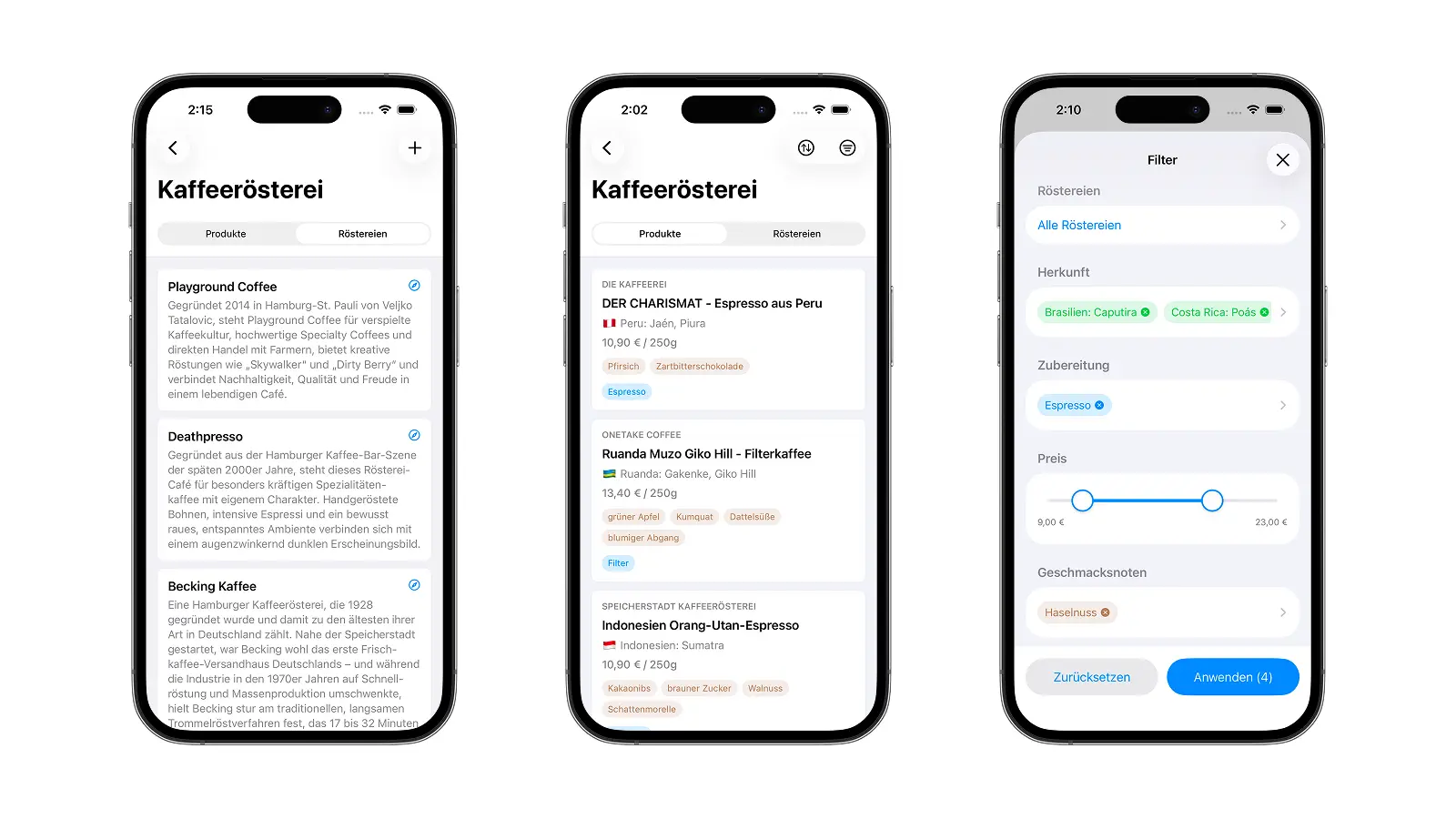
With that, people can filter based on country, region, price, and taste profile. They can discover new coffee and support local businesses at the same time. So I started to dig into the world of beans roasted in Hamburg.
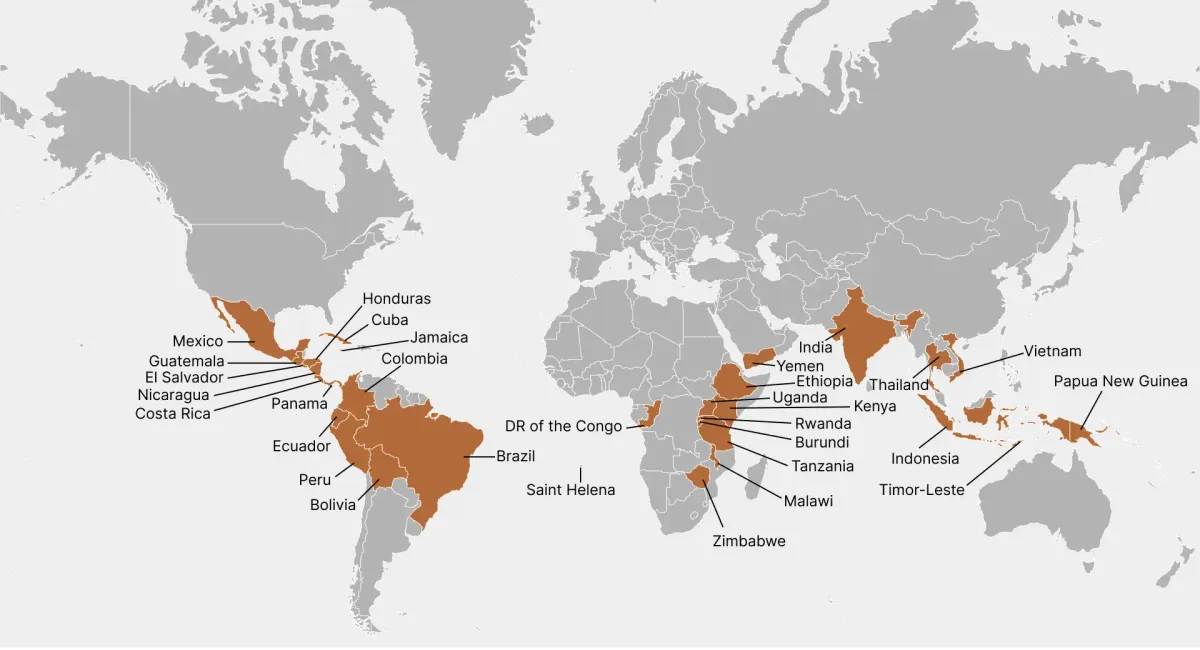
Once I started to collect data from the websites of the roasters, I was surprised by the variety. Just to give you an example, in the book from James Hoffmann, there were 29 countries that grow coffee beans. In the second version of the book, this number increased to 35.
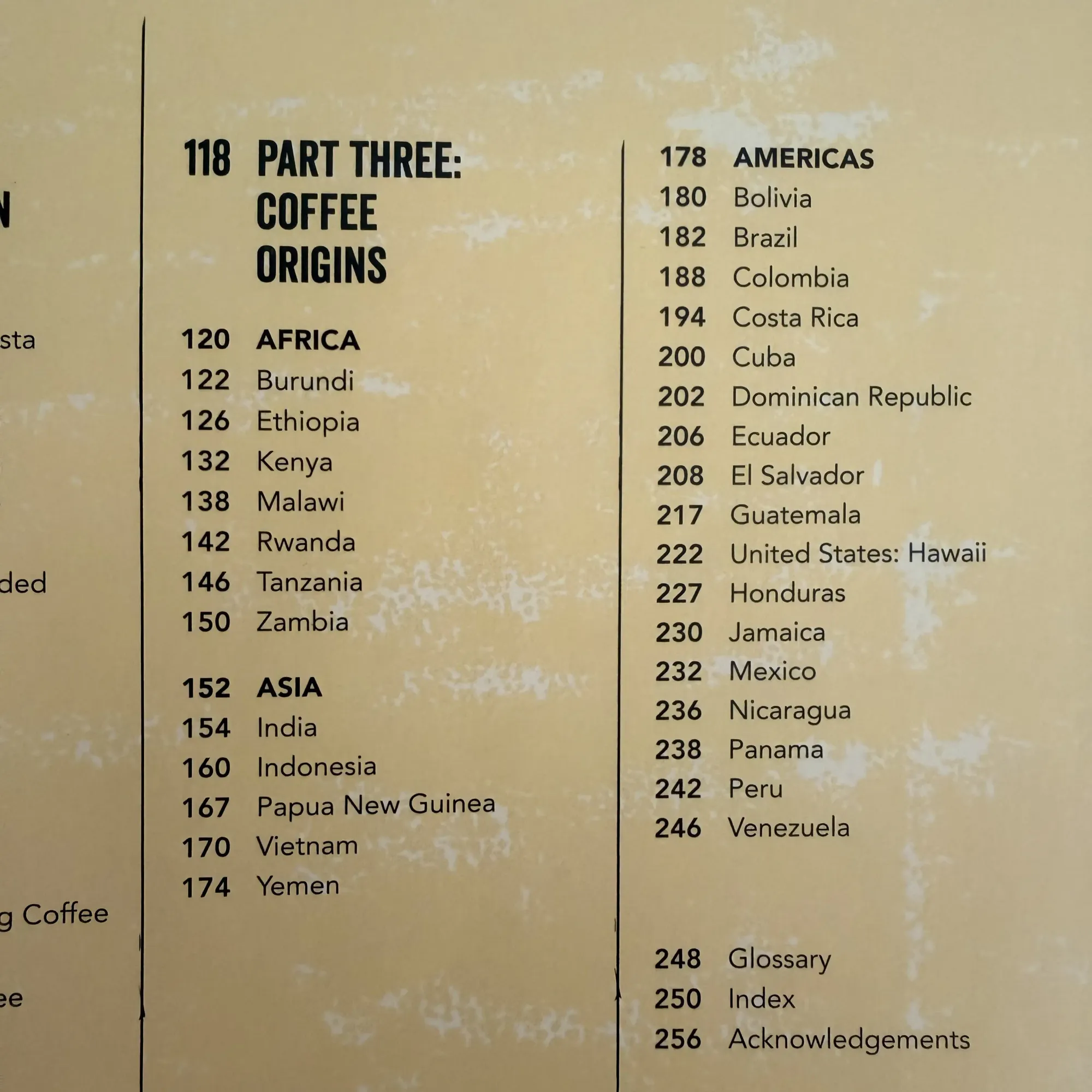
When I checked the number of countries of beans being roasted and sold in Hamburg, that number was 31. And the number of regions was around 200.
Just think about this. There are roasters in Hamburg where you can get freshly roasted coffee from almost every single country that grows coffee. Isn't this amazing?
If you're wondering about the missing countries, they are:
- China
- Haiti
- Philippines
- Zambia
- Dominican Republic
- United States, Hawaii
- Venezuela
There were also countries and territories that grow beans, and you can buy beans from them in Hamburg, but they were not mentioned in the book:
- Zimbabwe
- Saint Helena
- Timor-Leste
Honestly, I didn't even know the last two places existed. But somehow, someone in Hamburg knows them, imports beans from there, roasts them, and sells them to us.
This is one of the reasons why I love Hamburg so much. It is not a very big city like Paris or London, even though it is the second biggest city in Germany. But you can still find almost anything you want here.
This is also why I really believe in supporting local businesses. If we support them, they can survive. And because they survive, we can keep finding these special things in our city.
Maybe one of the roasters in Hamburg will read this and decide to import beans from the missing countries, so we can complete the list one day.
Or maybe you already know a roaster in Hamburg that I don't know yet. Maybe they are already importing beans from one of the countries on the list. If that's the case, please send it to me. I would really love to know.