
Vierländer Platte: The Unexpected Hamburg Tomato
A tomato from Hamburg that unexpectedly tasted like the ones I grew up with, soft, juicy, and full of that simple, unmistakable tomato flavour I had been missing in Germany.

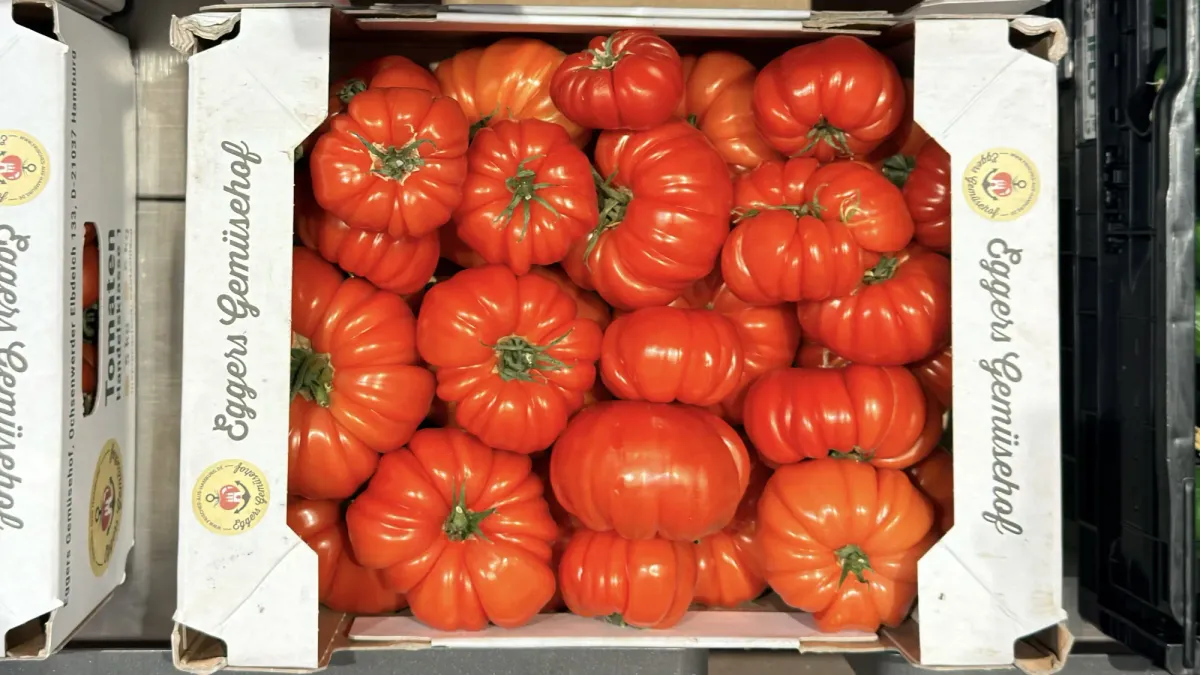
There are some vegetables or fruits that certain countries seem to become obsessed with during their season. In Hamburg, strawberries and apples are a good example. When the harvest season arrives, you suddenly see them everywhere. People talk about them, bakeries fill up with seasonal pastries, and supermarkets dedicate entire sections to them. The same thing happens with Spargel in spring and Grünkohl in winter.
I really like these seasonal promotions because they make it impossible to miss what is currently in season. You know that if you buy those fruits or vegetables at that moment, they will probably taste great, and they are usually cheaper too. It feels like a small celebration of the harvest.
I don't remember seeing this level of promotion when I was living in Turkey. Of course, when watermelon, cherries, or green plums are in season, everybody knows it, although these days people mostly talk about how expensive they have become. In my hometown, aubergines are also a big deal because they are used in so many dishes, whether grilled or stuffed with spiced rice. But there is one vegetable that is mentioned almost constantly: tomatoes.
Tomatoes are everywhere in Turkish cuisine. You can find them in countless dishes, either fresh or in the form of tomato paste, which is much more concentrated than the tomato paste you can find in German supermarkets. Tomatoes are also present at almost every breakfast table, and even if they are not part of the main dish, there is usually a salad on the side that contains them. Because they play such a central role in the cuisine, people are quite picky when it comes to tomatoes.
When I moved to Germany, finding good tomatoes turned out to be surprisingly difficult. For a while I tried almost every tomato I could find at REWE, but eventually I gave up and settled on cherry tomatoes because they were the only ones that consistently tasted good. What surprised me the most were some of the larger varieties. They looked beautiful but often tasted watery and bland. I still remember trying some tomatoes from REWE Bio and being shocked by how little flavour they had. If I remember correctly, they came from the Netherlands. The cherry tomatoes I regularly buy from Spain under REWE Beste Wahl were usually much better.
Anyway, at the beginning of this year, while I was adding a new section to the Franzbrötchen app that shows farms around Hamburg, I stumbled upon a farm growing tomatoes. Not just any tomatoes, but a very special variety called Vierländer Platte.
Curious, I started reading more about it and came across the following description:
The Vierländer Platte is a historic heirloom beefsteak tomato variety originating from the Vierlande region southeast of Hamburg — a fertile agricultural area comprising the four quarters of Curslack, Kirchwerder, Neuengamme, and Altengamme. Likely descended from an Italian beefsteak variety, it gradually adapted to the Hamburg region through decades of local cultivation and seed-saving, with records of it being grown in Hamburg-Vierlande as far back as the early 19th century. Its survival is owed to dedicated local growers who refused to let it disappear: seeds were passed down from elderly Vierlande gardeners, with the best fruits selected each year and seeds extracted by hand, until the broader heirloom revival brought it back into wider appreciation.
A relatively late-ripening variety, it produces flat, slightly ribbed fruits that typically grow 8 to 14 cm across and can weigh up to 600 grams, with tender, melting flesh and multiple seed chambers. The skin is soft, and the flavor is distinctly and authentically tomatoey — gently tart with an old-fashioned depth that modern commercial varieties rarely match, making it a favorite among those who seek out traditional regional produce.
After reading that, I was convinced that this was the tomato I had been looking for. Then I just had to wait for the season.
When I finally saw them at the supermarket, I bought a kilogram without thinking twice.
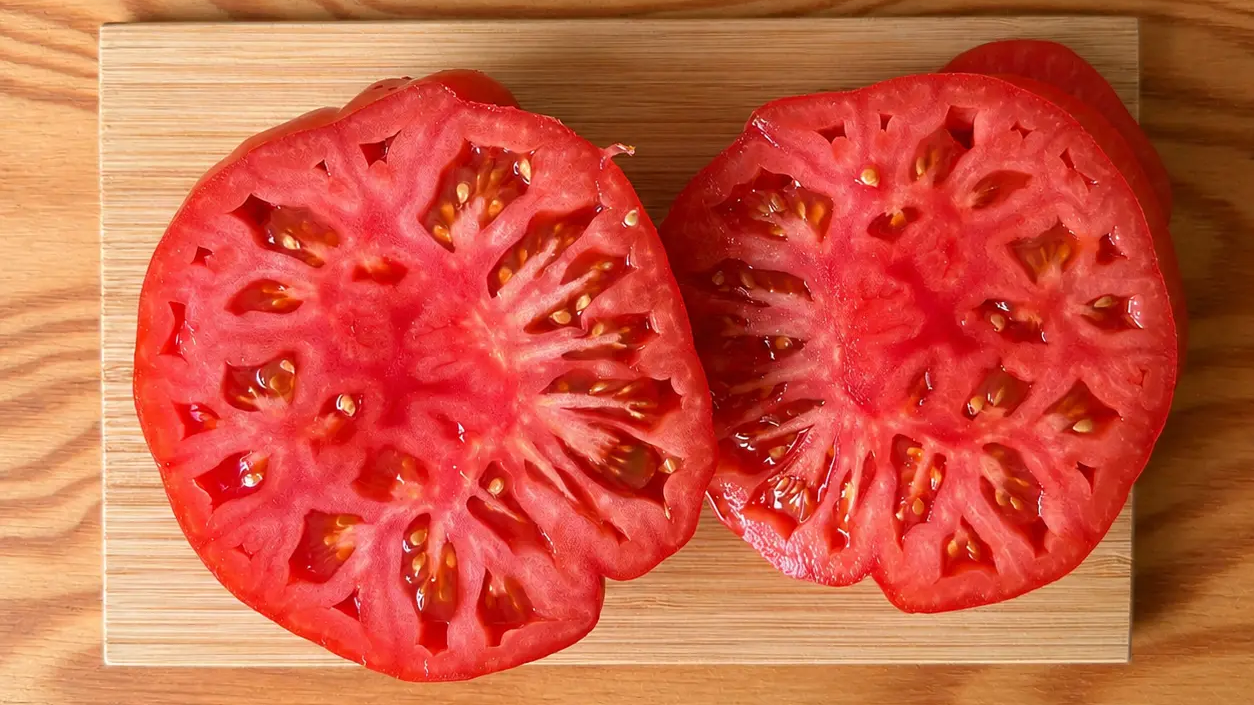
Back home, I cut one open and immediately noticed the smell. It reminded me of the tomatoes I grew up eating. The flesh was soft and juicy, and unlike most supermarket tomatoes, it actually tasted intensely of tomato. Sweet, slightly acidic, and full of flavour.
What struck me most was that I stopped comparing it to the tomatoes from Turkey. Usually, every tomato I bought in Germany was judged against a memory. This time I simply enjoyed what was on my plate. It was the first tomato I had eaten in Hamburg that made me think: yes, this is a really good tomato.
This kind of beefsteak tomato is perfect for sandwiches, burgers, and salads. Before I even bought it, I already knew what I wanted to make with it.
In the region where I grew up, in southeastern Turkey, there is a salad called Bostona Salatası. We usually eat it with kebabs, but it is also great when you just want something refreshing on a hot day.

It consists of:
- tomato
- pointed pepper (sivri biber)
- cucumber
- onion
- parsley
- fresh mint
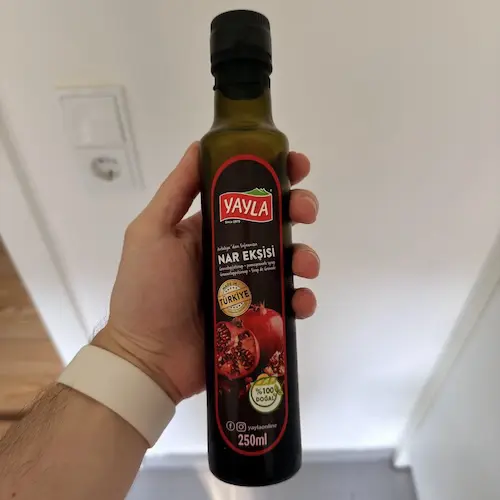
- pomegranate molasses (nar ekşisi)
- fresh lemon juice
- salt and pepper
Before going into the details, I should mention that I have never seen the right kind of pointed peppers in German supermarkets, so you will probably need to visit a Turkish supermarket. That's why I am mentioning the Turkish name.
The same is true for pomegranate molasses. This is one of the key ingredients of the salad and I was always surprised that it never became more popular outside Middle Eastern and Turkish cuisines. It adds sweetness, acidity, and a depth of flavour that is difficult to replace.
If you visit a Turkish supermarket, you will probably find several brands at very different price points. Because producing real pomegranate molasses is expensive, some cheaper brands dilute it with glucose syrup and other ingredients. Personally, I always try to buy the pure versions made entirely from pomegranate concentrate. They cost more, but the difference is worth it. The only brand I have found so far that sells a 100% pure version is YAYLA. It costs around 7€ for 250 ml, which is definitely not cheap, but I would still recommend it over the cheaper alternatives.
Preparing the salad is simple. Everything is chopped very finely and mixed together. This is not the kind of salad that you eat with a fork. Once the salt is added, all the vegetables start releasing their juices, especially the tomatoes. By the time everything is mixed together, it almost looks like a cold soup.
That is exactly how it should look.
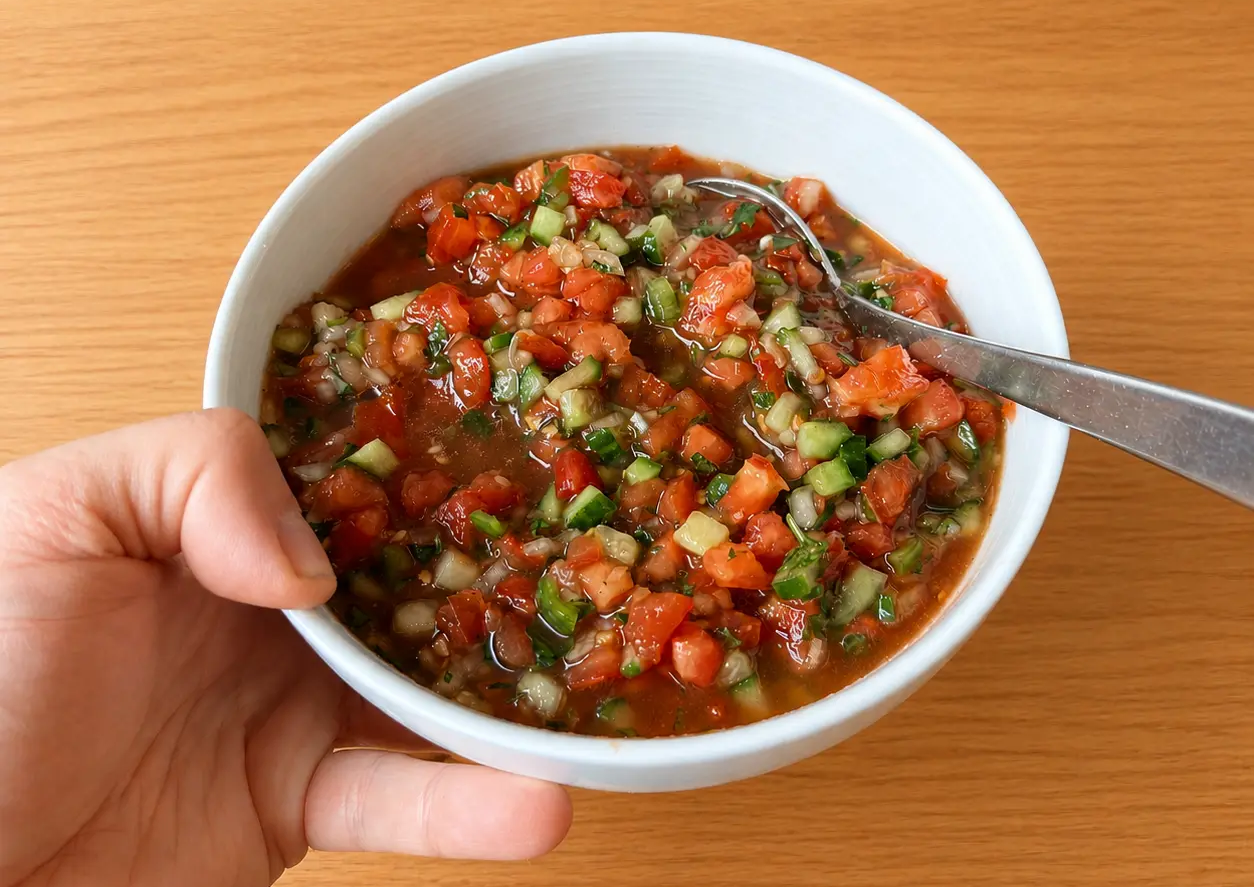
Every spoonful contains tomato juice, lemon juice, herbs, onion, pepper, cucumber and pomegranate molasses. The flavours blend together into something incredibly refreshing. During the hottest summer days, people even add a few ice cubes to it. It sounds unusual, but it works remarkably well and makes the salad even more refreshing.
And this is where the Vierländer Platte really shines. Because the tomatoes are so flavourful, the juice they release becomes part of the dressing itself. With ordinary supermarket tomatoes, the salad can end up tasting watery. With these tomatoes, every spoonful tastes intensely of tomato.
Of course, there is a catch. The Vierländer Platte is the best tomato I have eaten in Hamburg, but it is also the most expensive one.
The tomatoes I buy come from Eggers Gemüsehof, a sixth-generation family farm in Hamburg's Vier- und Marschlanden that has been operating since 1886. You can find their tomatoes at REWE, EDEKA, and weekly markets. They currently cost around 10€ per kilogram.
I have to admit that for a long time I probably ignored them because of the price. Now, whenever I see them, I still hesitate for a moment before putting them into my basket.
What fascinates me most is that, as Hamburgers, we have access to this very special tomato that is grown right here in our city. I spent years looking for a tomato that matched my expectations and somehow completely overlooked one of Hamburg's own traditional varieties.
Finding the Vierländer Platte also made me wonder what other local fruits and vegetables I have been ignoring all this time. If a tomato this good has been growing here for generations, there are probably other regional specialties hiding in plain sight, waiting to be discovered.